Rigging and standing rigging⚓🚢 #sailboat #sailing
23 de febrero de 2025 · 10 min · 262 visitas · Lake Garda
Qué cubre este vídeo
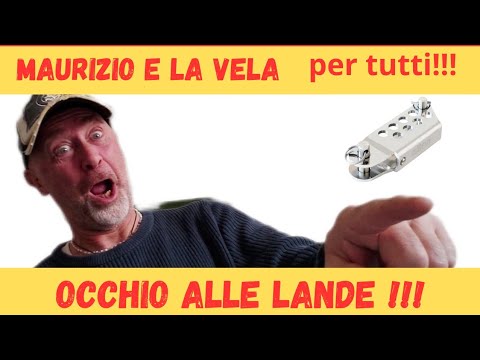
The Marconi rig consists of an aluminum mast with a track for the mainsail luff, a boom attached via a gooseneck (trozza), and optional spars like a spinnaker pole (tangone) or bowsprit (bonpresso) for flying downwind sails.0:50 Standing rigging includes forestays and backstays—or a split backstay called a backstay bridle (paterazzo)—to control longitudinal mast movement, while shrouds (sartie) supported by spreaders (crocette) prevent lateral bending.3:40 Modern rigs may use swept-back spreaders to stabilize the mast without a backstay.3:59 These cables attach to the deck via chainplates (lande) and are tensioned with turnbuckles (arridatoi).4:19 Sails are constructed from panels (fersi) and feature specific terminology for corners—head (penna), tack (mura), and clew (bugna)—and edges—luff (infieritura), foot (base), and leech (balumina).4:49 Battens (stecche) maintain the airfoil shape, and reefing points (terzaroli) allow for sail area reduction.6:03 Wind assessment relies on a masthead wind vane (Windex) for direction and an anemometer for speed in knots.7:39 On Lake Garda, the primary thermal winds are the northerly Peler and the southerly Ora.8:48
Barcos en este vídeo
Más de Maurizio and the sail



De Maurizio and the sail — mira el barco del canal, la tripulación y cada vídeo analizado.
The Sailing Directory Newsletter
Un correo electrónico con los mejores hallazgos de la flota: los momentos, barcos e historias que merecen tu tiempo de visionado. Introduce tu dirección para recibir tu propia copia.