The Marinervídeo
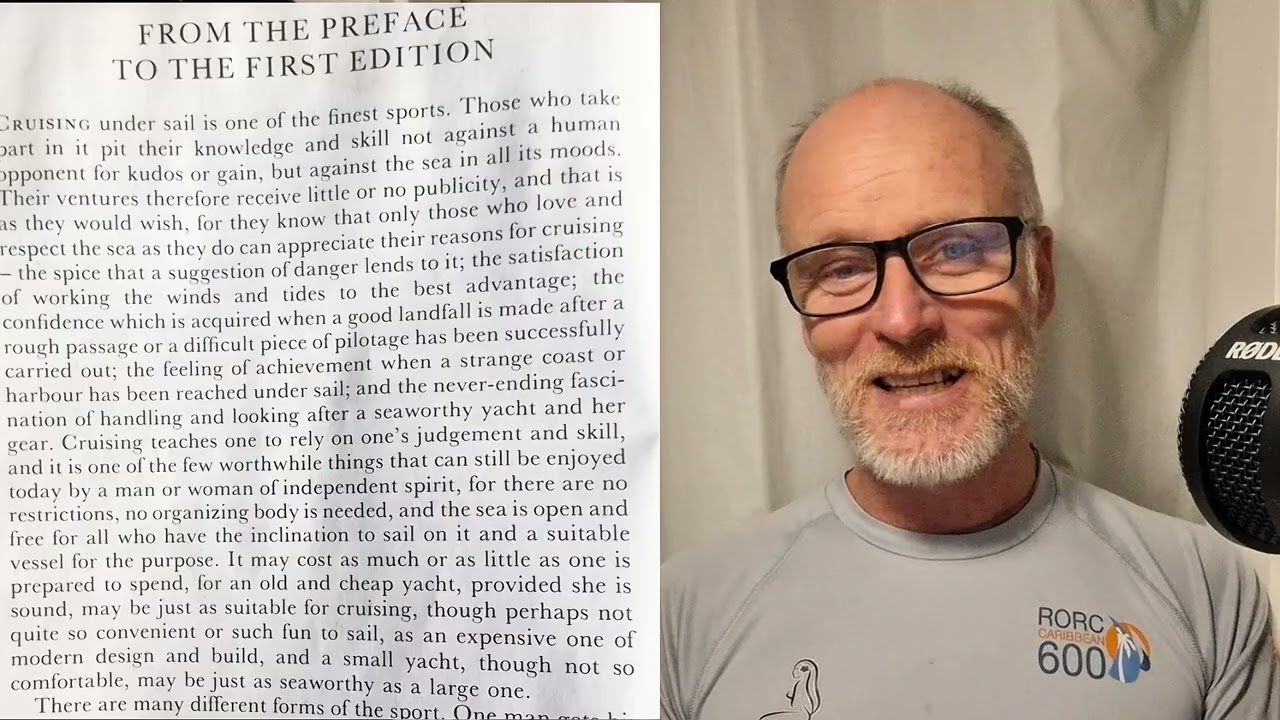
Cruising Under Sail | Eric Hiscock | Hull Form Stability
8 de octubre de 2026 · 52 min · 4K visitas
Qué cubre este vídeo
Initial stability in sailing yachts depends on hull shape, beam-to-length ratio, and the turn of the bilge, rather than ballast.7:53 A yacht with a wider beam relative to its length possesses greater initial stability, acting similarly to a raft.10:23 Conversely, boats with rounder, bottle-like hull sections and less pronounced turns at the bilge are inherently more tender or "crank," meaning they heel more readily under wind pressure.12:43 Fuller hull sections that carry beam further toward the bow and stern increase stiffness by providing more water-plane area.19:01 While ballast—whether internal lead pigs or a deep, bolted-on keel—provides righting moment and dynamic stability, it does not dictate initial stability.2:20 Modern racing designs often utilize deep keels or canting mechanisms to shift weight and improve performance, whereas traditional designs relied on hull form and internal ballast placement to manage trim and stability during long passages.4:14
Más de The Mariner




De The Mariner — mira el barco del canal, la tripulación y cada vídeo analizado.
The Sailing Directory Newsletter
Un correo electrónico con los mejores hallazgos de la flota: los momentos, barcos e historias que merecen tu tiempo de visionado. Introduce tu dirección para recibir tu propia copia.