SailingAlonevideo
Storm sailing. How? Technique and navigation
6 de junio de 2026 · 11 min · 344K vistas · Pazifischer Ozean
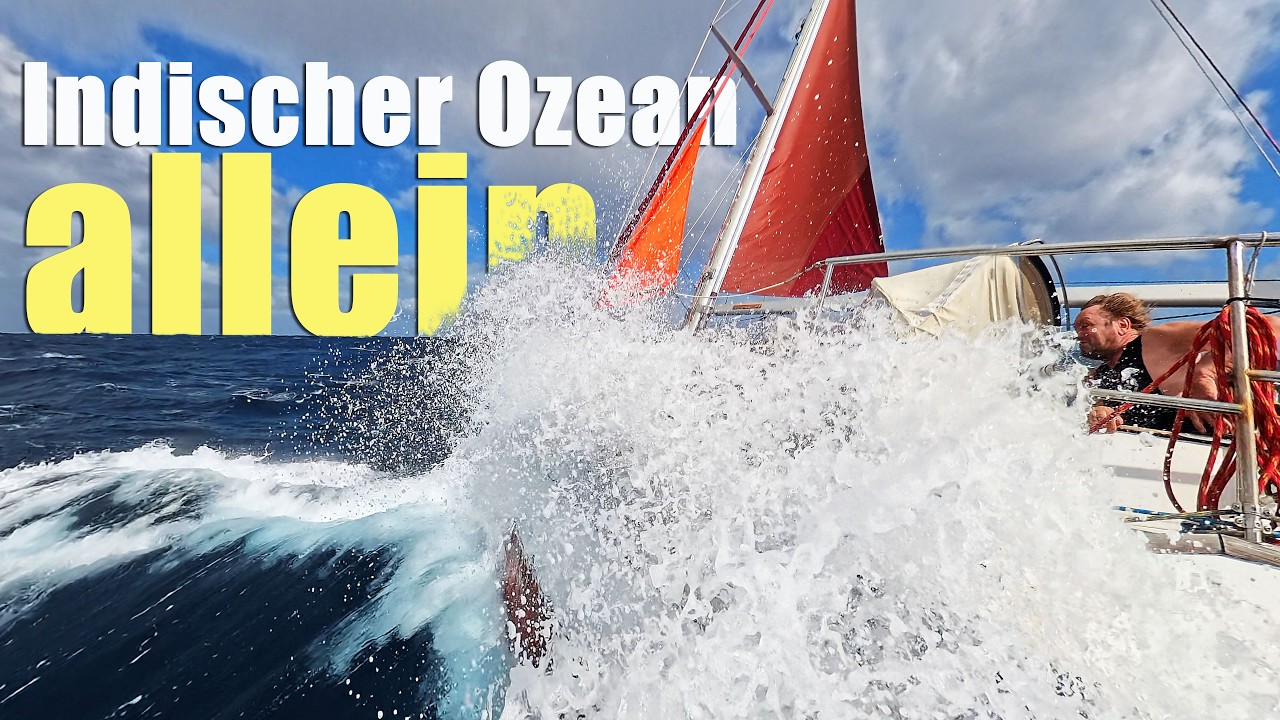
Sailboat heeling hard in storm waves, red sail taut
¿Qué cubre este video?
Heavy-weather sailing technique for a singlehander covers preparation, sail trim, and storm tactics across wind strengths from 28 to 47 knots (Beaufort 7–9), with survival conditions above Force 10 treated as a separate category.1:02 Before the storm arrives, the skipper pre-cooks food, charges all batteries (the wind generator shuts off at 30 knots), stows loose gear, checks the anchor, verifies the lifeline, and pre-loads medications including suppositories for seasickness already in progress.1:59 Gusts, not mean wind, determine reef decisions; wave height and period determine whether sailing is possible at all.4:04 A breaking wave at 40 percent of waterline length can capsize the boat — on Raikja, a 10-meter waterline vessel, that threshold is 4 meters.4:51 Close-hauled is the worst point of sail in storm conditions: the boat pounds, makes little progress, and the motion causes seasickness fastest.5:32 Beam reach works well until squalls cause heading oscillations that overwhelm wind-vane steering, forcing the autopilot or hand-steering.7:47 Downwind sailing is comfortable but demands a preventer to stop an accidental gybe, and steering in following seas above 35 knots becomes unmanageable.8:52 Heaving-to on Raikja requires dropping the headsail and using mainsail alone with helm hard to leeward, reducing drift to 1.5 knots.10:28 A Jordan series drogue is carried for Force 10 survival conditions.11:12
Más de SailingAlone

De SailingAlone — ve el barco, la tripulación y cada video analizado del canal.
The Sailing Directory Newsletter
Un correo electrónico con los mejores hallazgos de la flota: los momentos, barcos e historias que valen tu tiempo de visualización. Ingresa tu propia dirección para obtener tu propia copia.