City Sailingvideo
How a sail works
20 de noviembre de 2020 · 8 min · 662 vistas
¿Qué cubre este video?
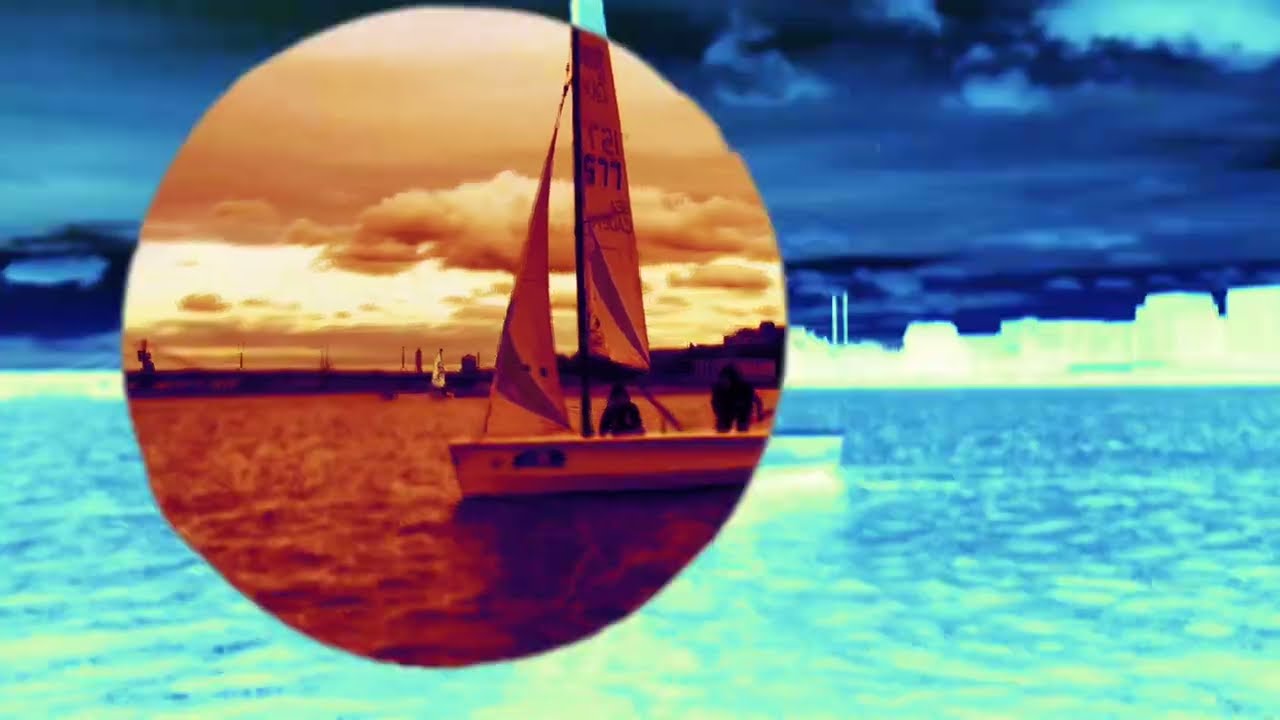
Sails generate lift through a combination of the Bernoulli principle and Newton’s laws of motion. The Bernoulli effect occurs when wind traveling over the curved outer surface of a sail moves faster than the air on the inside, creating a low-pressure zone that pulls the sail forward. This principle is demonstrated by blowing across a strip of paper or a cork in a block, which causes the object to rise or move due to the pressure differential. Newton’s third law, which states that every action has an equal and opposite reaction, explains the force generated by the sail's angle of attack. As the sail deflects wind, it pushes air in one direction, resulting in a reactive force that propels the boat. A toy helicopter demonstrates this concept, as its angled blades push air downward to generate upward lift. Modern high-performance vessels, such as those in the America's Cup, utilize these combined aerodynamic forces to sail faster than the wind speed.
Más de City Sailing




De City Sailing — ve el barco, la tripulación y cada video analizado del canal.
The Sailing Directory Newsletter
Un correo electrónico con los mejores hallazgos de la flota: los momentos, barcos e historias que valen tu tiempo de visualización. Ingresa tu propia dirección para obtener tu propia copia.