How to Crimp Large Cable Lugs For Offgrid Solar or Marine Electrical
27 de mayo de 2026 · 15 min · 510K vistas
Man applies heat shrink to cable lug on battery terminal
¿Qué cubre este video?
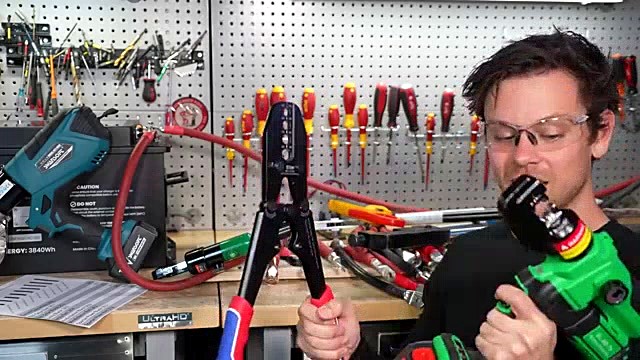
Crimping large copper cable lugs for off-grid solar and marine electrical systems requires matching lug wall thickness to the crimper's die, and budget lugs fail that test. Will Prowse discovered a high-resistance, overheating connection by cutting open a crimp made with a budget lug: the wire strands had not bonded because the lug's thinner walls — 35 grams versus 50 grams for a Selterm UL-listed lug — prevented a true cold weld with hydraulic or electric dies.1:37 UL-listed lugs from Selterm and Ancor cost roughly $3.50 each versus $2.20 for budget versions, yet deliver 30% more copper and a larger tongue that runs cooler under high current.7:38 The step-by-step process covers cable cutting with a ratcheting cutter, stripping insulation with gloves to avoid skin-oil contamination, inserting the lug, crimping with a hammer, manual leverage, or electric crimper, and finishing with marine-grade adhesive heat shrink — preferably translucent for joint inspection.4:36 Soldering large lugs is explicitly rejected: solder is a dissimilar metal that can pull free under heat.9:43 Tri-point crimpers are also condemned for cutting through the lug barrel.10:38 Prowse recommends verifying every new crimp setup by sawing the first crimp in half; a true termination shows a single solid copper mass with no visible wire strands.9:35 A thermal camera check every six months catches developing hot spots, especially in marine environments.12:20
Más de DIY Solar Power with Will Prowse


De DIY Solar Power with Will Prowse — ve el barco, la tripulación y cada video analizado del canal.
The Sailing Directory Newsletter
Un correo electrónico con los mejores hallazgos de la flota: los momentos, barcos e historias que valen tu tiempo de visualización. Ingresa tu propia dirección para obtener tu propia copia.