Leon explains: EPIRB and its Hydrostatic Release Unit (HRU)
28 maggio 2024 · 6 min · 2K visualizzazioni
Cosa tratta questo video
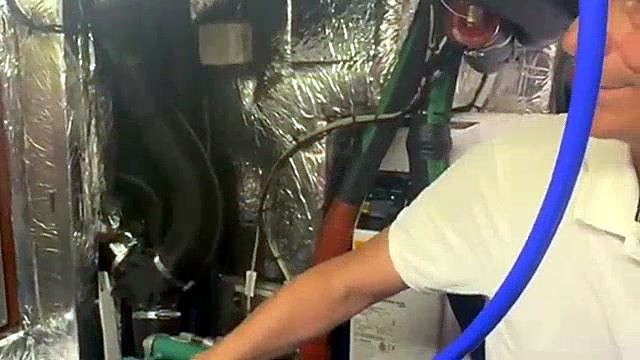
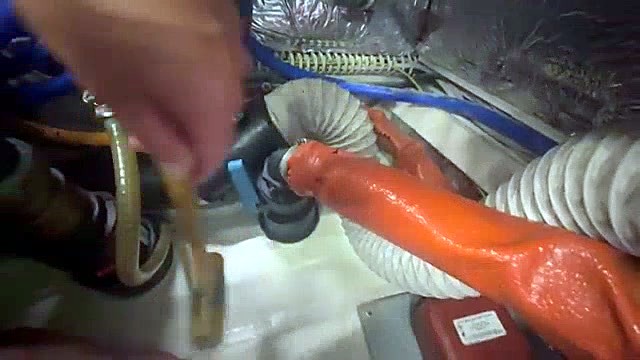
Leon Schulz demonstrates the Jotron Drone 60 GPS EPIRB and its HRU (Hydrostatic Release Unit), explaining when and why an EPIRB is required — specifically, once a vessel leaves GMDSS Area A1 and VHF coverage becomes unreliable, such as crossing the North Sea.1:10 The EPIRB transmits distress signals to satellites and the corresponding Maritime Rescue Coordinating Centre (MRCC).1:32 Schulz walks through the maintenance schedule: battery replacement every five years, housing replacement every 10–15 years, and the H20 HRU replacement every two years.2:34 The H20 contains a knife that cuts a plastic bolt at a depth of 1.5 to 4 meters, releasing a spring that frees the EPIRB to float to the surface and activate automatically on water contact.2:47 He stresses that the plastic bolt must be sourced exclusively from Jotron — a substitute bolt may be too strong for the spring to cut.3:17 The self-test procedure involves holding the test button for 15 seconds until the unit blinks once.1:46 Schulz then submerges his expired H20 unit to confirm it still functions, and the bolt cuts cleanly.5:26 He also references earlier Jotron devices he has owned, including a radar SART and an AIS SART, and a Jotron AQ4 strobe light purchased roughly 40 years ago.0:36
Barche in questo video
Altro da Leon Schulz, Reginasailing



Da Leon Schulz, Reginasailing — guarda la barca, l'equipaggio e ogni video analizzato del canale.
The Sailing Directory Newsletter
Una email con le migliori scoperte della flotta — i momenti, le barche e le storie che meritano il tuo tempo di visione. Inserisci il tuo indirizzo per riceverne una copia.