BoatHowTovídeo
Massive SAILDRIVE CORROSION - How to avoid this expensive fail. | Ask The Expert with NIGEL CALDER
30 de maio de 2024 · 5 min · 5K visualizações
O que este vídeo aborda
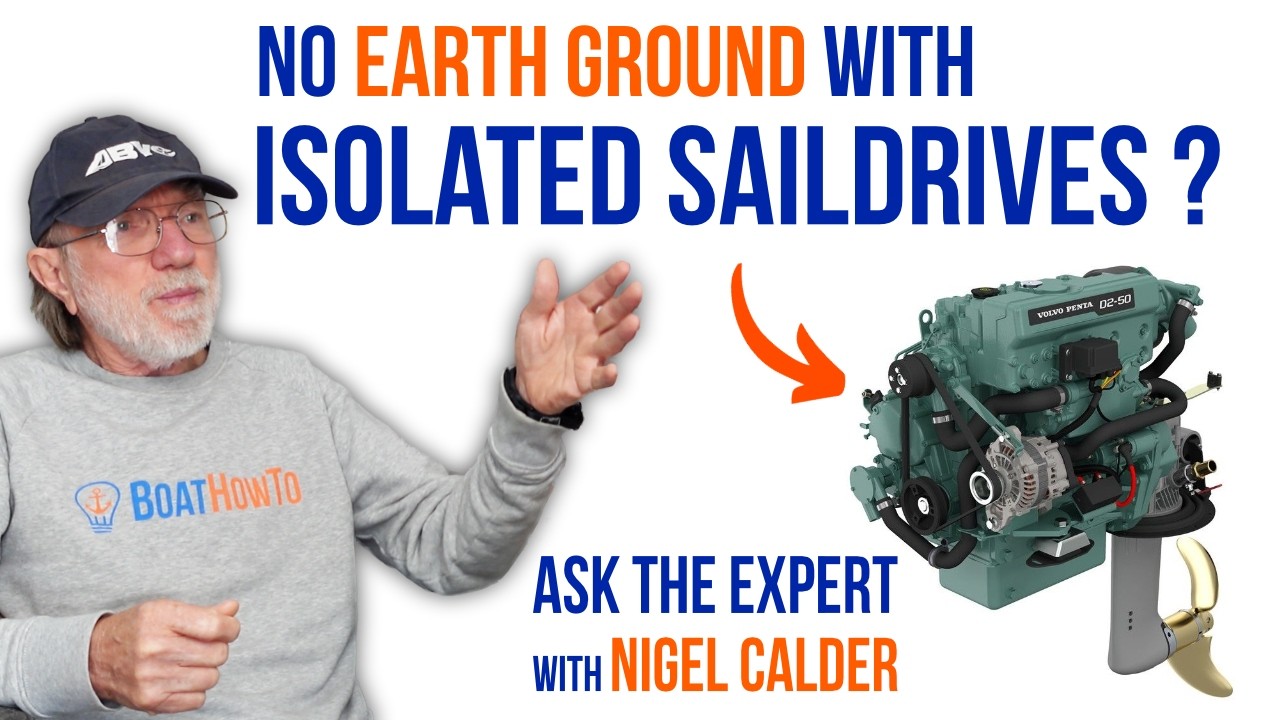
Aluminum saildrive legs suffer severe galvanic corrosion when electrically connected to more noble metals like bronze propellers, steel dock components, or other boats via a shore power grounding wire.0:38 Because aluminum sits high on the galvanic series, the drive leg acts as a sacrificial anode for these connected metals, often resulting in total unit failure within one or two seasons.Watch To prevent this, install a galvanic isolator or an isolation transformer to break the electrical path between the boat’s grounding system and the shore power ground.1:59 If the drive leg remains connected to the engine and the boat’s DC negative bonding circuit, ensure the leg has dedicated sacrificial anodes and maintain the unit's protective paint coating to minimize exposed aluminum.3:50 Volvo Penta units avoid this issue through a patented system that electrically isolates the drive leg from the engine and the rest of the boat.3:06 Yanmar and other manufacturers explicitly state that drive leg anodes protect only the leg itself, not the broader vessel.4:28 Proper isolation and anode maintenance prevent rapid, expensive structural degradation of the drive unit.4:04
Mais de BoatHowTo


De BoatHowTo — veja o barco, a tripulação e todos os vídeos analisados do canal.
The Sailing Directory Newsletter
Um email com os melhores achados da frota — os momentos, barcos e histórias que valem o seu tempo de visualização. Insira o seu endereço para receber a sua cópia.