Yourbestsailβίντεο
Points of sail and heeling: part two.
28 Μαρτίου 2024 · 13 λεπτά · 2K προβολές
Τι καλύπτει αυτό το βίντεο
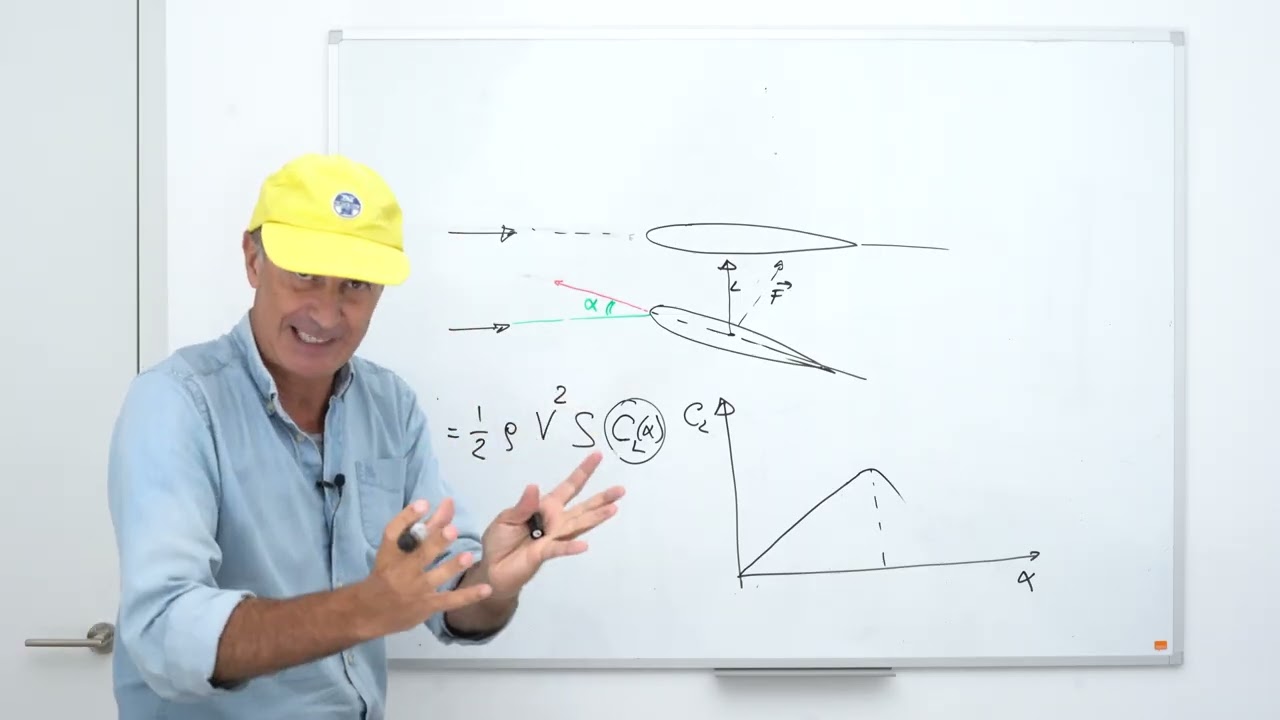
Heeling increases when a sailboat bears away from a close-hauled course while maintaining the same sail trim.10:38 This phenomenon occurs because the angle of attack between the wind and the sail chord increases, raising the lift coefficient until the sail reaches a stall point, typically between 20 and 25 degrees.5:46 Beyond this angle, the airflow over the sail becomes turbulent, lift collapses, and the sail functions primarily through drag.6:33 While bearing away initially increases heeling, the total force on the sail eventually drops once the sail stalls.10:49 Conversely, luffing up into the wind from an optimal close-hauled trim reduces the angle of attack, effectively decreasing heeling.11:37 This technique serves as a primary method for managing sudden gusts, particularly on light-displacement sailboats, though it may cause the sails to luff or flap.11:26 Understanding the relationship between the angle of attack, lift, and drag coefficients explains why sail trim must be adjusted when changing points of sail to maintain efficiency and control heel.11:27
Περισσότερα από το Yourbestsail

Από Yourbestsail — δείτε το σκάφος του καναλιού, το πλήρωμα και κάθε αναλυμένο βίντεο.
The Sailing Directory Newsletter
Ένα email με τις καλύτερες ανακαλύψεις του στόλου — τις στιγμές, τα σκάφη και τις ιστορίες που αξίζουν τον χρόνο παρακολούθησής σας. Εισάγετε τη διεύθυνσή σας για να λάβετε το δικό σας αντίγραφο.