Yourbestsailvideo
Anchoring and peculiarities
14 de mayo de 2026 · 12 min · 1K vistas
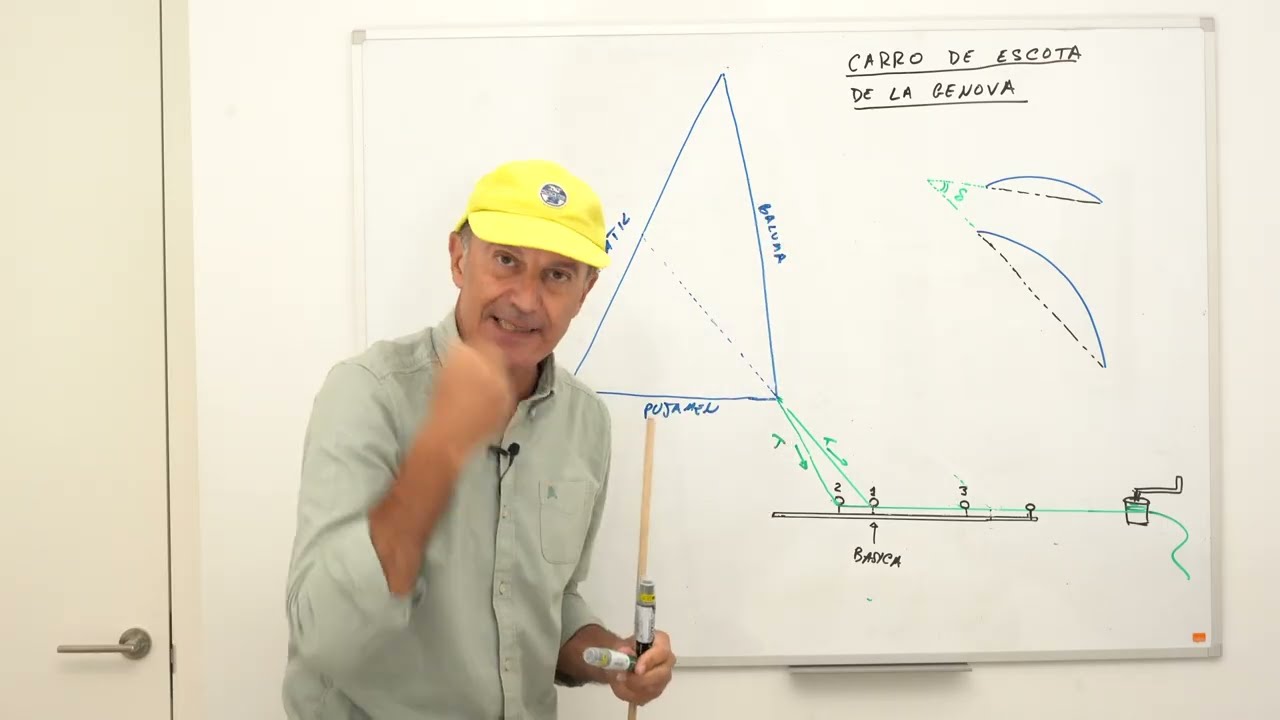
Man in yellow cap draws sailboat on whiteboard.
¿Qué cubre este video?
Anchoring in sand provides the most secure holding, as it offers predictable feedback through hull vibrations if the anchor begins to drag.2:21 Avoid rocky, muddy, or weed-covered bottoms, which lack consistent holding power and may cause the anchor to release without warning.0:45 When anchoring overnight, sailors must analyze weather forecasts to predict wind shifts and potential swinging arcs.3:03 In areas with significant tidal currents, vessels may experience 360-degree swings twice daily as the tide turns.4:27
Strong, gusty winds often cause a vessel to oscillate or "sail" at anchor.5:19 This occurs when gusts tension the chain, pulling the boat back, followed by a slackening of the chain as the wind drops.7:09 As the boat drifts forward, it loses its orientation to the wind and begins to beam-reach.7:57 To stabilize the vessel and keep the bow pointed into the wind, ketch-rigged boats can hoist a mizzen sail.8:56 Sloop-rigged vessels can achieve the same effect by deploying a small steadying sail on the backstay.9:54
Más de Yourbestsail



De Yourbestsail — ve el barco, la tripulación y cada video analizado del canal.
The Sailing Directory Newsletter
Un correo electrónico con los mejores hallazgos de la flota: los momentos, barcos e historias que valen tu tiempo de visualización. Ingresa tu propia dirección para obtener tu propia copia.