Yourbestsailvídeo
Anchoring and peculiarities
14 de maio de 2026 · 12 min · 1K visualizações
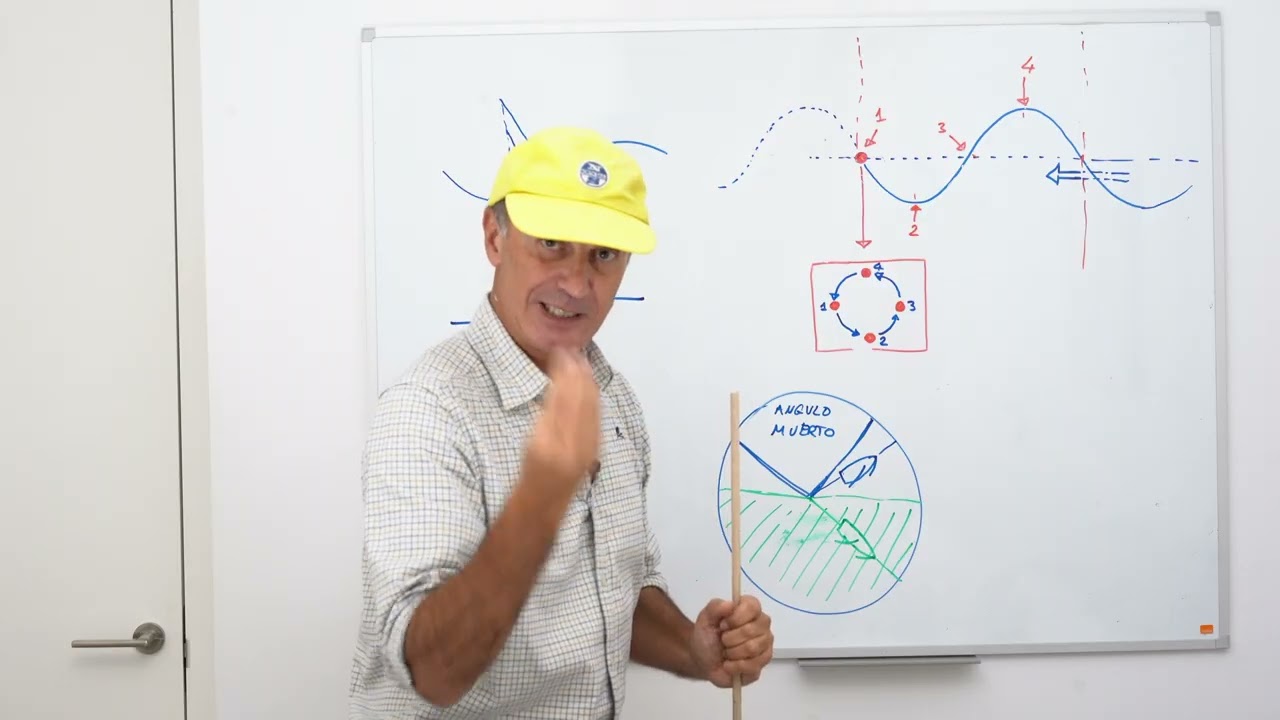
Man in yellow cap draws sailboat on whiteboard.
O que este vídeo aborda
Anchoring in sand provides the most secure holding, as it offers predictable feedback through hull vibrations if the anchor begins to drag.2:21 Avoid rocky, muddy, or weed-covered bottoms, which lack consistent holding power and may cause the anchor to release without warning.0:45 When anchoring overnight, sailors must analyze weather forecasts to predict wind shifts and potential swinging arcs.3:03 In areas with significant tidal currents, vessels may experience 360-degree swings twice daily as the tide turns.4:27
Strong, gusty winds often cause a vessel to oscillate or "sail" at anchor.5:19 This occurs when gusts tension the chain, pulling the boat back, followed by a slackening of the chain as the wind drops.7:09 As the boat drifts forward, it loses its orientation to the wind and begins to beam-reach.7:57 To stabilize the vessel and keep the bow pointed into the wind, ketch-rigged boats can hoist a mizzen sail.8:56 Sloop-rigged vessels can achieve the same effect by deploying a small steadying sail on the backstay.9:54
Mais de Yourbestsail

De Yourbestsail — veja o barco, a tripulação e todos os vídeos analisados do canal.
The Sailing Directory Newsletter
Um email com os melhores achados da frota — os momentos, barcos e histórias que valem o seu tempo de visualização. Insira o seu endereço para receber a sua cópia.