This Is Why Your Alternator Is Overheating | TECH TALK
28 de maio de 2026 · 4 min · 4K visualizações
Marine alternator glowing hot with smoke and sparks
O que este vídeo aborda
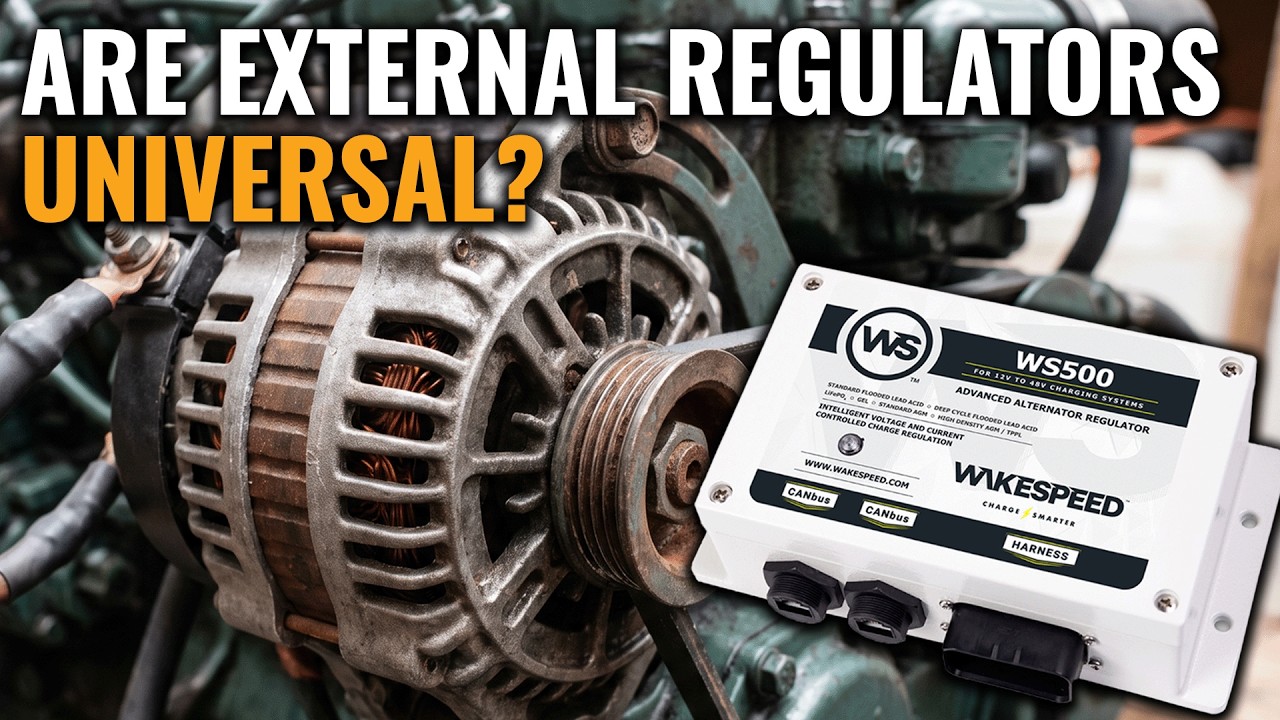
Lithium battery banks draw full alternator output continuously — unlike lead-acid batteries, they never signal the regulator to throttle back, making alternator overheating probable rather than merely possible regardless of alternator size (120 A, 200 A, or 300 A at 12 V).Watch Jeff Cote of Pacific Yacht Systems explains three countermeasures.0:21 First, install an external voltage regulator — he names Wakespeed (his current choice) and Balmar (his previous one) — which accepts a lithium charge profile and actively manages output.1:40 Second, mount a temperature sensor on the alternator chassis so the regulator can reduce or cut charging before the unit fails.2:04 Third, derate the alternator's maximum output; Cote runs his own alternator at 75% of rated capacity, trading peak charge speed for lower operating temperature and longer service life.2:36 The core problem is that lithium batteries present a near-constant bulk-charge load, so the alternator runs at high output for extended periods in an already-hot engine room.Watch An external regulator with a temp sensor and a deliberate output ceiling solves the overheating problem without abandoning fast charging entirely.3:59
Mais de Pacific Yacht Systems


De Pacific Yacht Systems — veja o barco, a tripulação e cada vídeo analisado do canal.
The Sailing Directory Newsletter
Um e-mail com os melhores achados da frota — os momentos, barcos e histórias que valem o seu tempo de visualização. Insira seu endereço para receber sua própria cópia.