Pesquisado em fontes publicadas
A história do Beneteau First 456
Como este modelo surgiu, quem o desenhou, o que mudou durante a produção e o que as pessoas escreveram sobre ele desde então. Cada afirmação tem a sua fonte; ▶ marca filmagens reais de um barco deste modelo.
Beneteau First 456
The Beneteau First 456 occupies an important and somewhat underappreciated niche in the evolution of production bluewater sailing yachts, blending the emerging industrial sophistication of the Beneteau yard in the early 1980s with the ocean‑racing pedigree of Argentine designer German Frers. Conceived as a high‑end performance cruiser at a time when Beneteau was transitioning from modest coastal boats to larger offshore designs, the First 456 was marketed explicitly as the model that lifted the yard into the circle of “luxury” bluewater builders, and its size, finish, and technical specification were chosen to compete with custom and semi‑custom boats of the era. Various specifications databases and period brochures describe a powerful masthead sloop with a fin keel and spade rudder, a hull length of about 13.9 metres, displacement around 12 tonnes, and sail area slightly under 85 square metres for the basic working rig, all arranged around a robust glass‑reinforced polyester hull and balsa‑cored deck. Contemporary reviews and owner communities have since emphasized how the design combines a stiff, easily driven hull with generous living space, allowing the boat to serve both as an offshore cruiser and competitive club racer, and this dual identity helped it find buyers among private owners and charter fleets through the mid‑1980s. At the same time, conflicting published data on dimensions, displacement, ballast ratio, and rig options illustrate how the model evolved across deep‑ and shoal‑draft variants and through the realities of refits, charter service, and owner modifications, giving the First 456 a layered history that goes beyond simple brochure numbers. The resulting story is one of an ambitious design that consolidated Beneteau’s First range as a credible offshore brand, left tangible traces in racing and cruising circles, and still prompts careful scrutiny from technically minded buyers today who must navigate the discrepancies in the record to understand what an individual boat actually is.
Historical Context and Design Origins
Beneteau’s Transition to Large Offshore Yachts
To understand the significance of the First 456, it is necessary to situate it within Beneteau’s rapid expansion during the late 1970s and early 1980s, when the yard moved from building small fishing craft and modest family cruisers into the realm of larger performance yachts. The “First” line, introduced at the close of the 1970s, was conceived as a performance‑oriented range that would offer club‑race competitiveness and more refined interior fit‑out than the company’s purely utilitarian series, and by the early 1980s Beneteau had already established a reputation for efficiently built, industrially produced fiberglass hulls. The First 456 appears in this trajectory as a deliberate step into the upper tier of the market: Beneteau’s own heritage description frames it as the boat that allowed the yard to rank among “the few builders of high luxury sailing yachts designed for blue water,” explicitly signaling an aspiration to compete with long‑distance cruiser‑racers from more boutique yards. While the heritage note is promotional in tone, it aligns with the technical reality that a 45‑foot‑plus design with sophisticated interior layouts, long‑range tankage, and offshore classification represented a considerable leap from the yard’s earlier output, both in construction complexity and in price.
Period classification systems and later databases support the view that the First 456 was conceived as an offshore cruiser‑racer rather than a simple coastal boat, with one French navigation category listing it in the then‑highest offshore category and subsequent technical digests describing it as an “offshore cruiser‑racer sailboat.” Ratios calculated from the published dimensions—such as a sail‑area‑to‑displacement figure around 16.5 and a comfort ratio near 29—place the design squarely in the performance‑cruiser band rather than extreme racing or heavy traditional cruising, further underscoring its intended niche as a boat that could make passages quickly yet still offer reasonable motion and accommodation. The model’s time in production, generally reported as beginning in 1982 and ending by 1987, overlaps with other significant First designs that established Beneteau’s presence in international racing circuits and charter fleets, indicating that the 456 was part of a broader strategic push rather than an isolated experiment.
German Frers and the Design Brief
The choice of German Frers as designer was central to the First 456’s identity, and documents from specifications databases and Beneteau’s own heritage record consistently attribute the hull and rig to “Frers Naval Architecture & Engineering” or “German Frers.” By the early 1980s Frers was already recognized internationally for creating fast, seaworthy offshore racers and cruiser‑racers, including IOR campaign boats and performance cruising yachts for prominent yards, so his name would have signaled a certain pedigree to prospective buyers. While surviving material does not include a detailed narrative of the design brief, the combination of hull form, rig proportions, and ballast figures suggests that Beneteau commissioned a boat that could sail competitively under rating rules of the era while maintaining the forgiving handling and interior volume expected of a production cruiser. Reviews that appeared in the sailing press describe the resulting hull as stiff and powerful, capable of carrying canvas well in strong breezes, and note that the boat feels like a “serious” offshore yacht compared to some of Beneteau’s lighter coastal designs of the same period.
Frers’ characteristic blend of fine ends and ample mid‑section volume is visible in the reported dimensions, which give the First 456 a relatively long waterline for its overall length and a broad beam around 4.3 metres, yielding a beamy, spacious interior but with enough length between perpendiculars to support good hull speed and a smooth motion. In several technical descriptions the boat is explicitly categorized as a “cruiser/regatta” or “croisière/régate” type, and owner‑oriented reviews produced decades later still stress that it is not a stripped‑out race boat but a comfortable, though purposeful, cruiser that can nonetheless hold its own in club racing or passage events. The blend of racing heritage and cruising intent would prove important for the model’s later reputation: many owners acquired First 456s not purely for competition but for bluewater cruising with the reassurance that the hull form and structure derived from a designer used to dealing with offshore conditions and rating‑rule constraints.
Chronology and Production Run
The chronology of the First 456’s production illustrates the kind of minor discrepancies that often arise around 1980s production yachts, and this in itself is historically revealing. Technical digests that aggregate builder data report that the first hulls were built in 1982, with production continuing until 1987, and make no mention of any re‑launch or significant design revision under the same name. A detailed review in an English‑language sailing magazine, however, describes the model as having been “launched in 1983” and states that production continued “for four years,” implying a span from 1983 to around 1987. Beneteau’s own heritage page confirms the early‑1980s timeframe and speaks of the First 456 as part of a group of models produced during the 1983–1988 window, but it does not provide explicit start and end dates for the specific model. Used‑boat brokerage listings give construction years such as 1983 and 1985 for individual hulls, which align comfortably with both the 1982–1987 range and the 1983–1987 narrower window suggested by the magazine.
The small discrepancies in reported start dates likely reflect the difference between design sign‑off, yard tooling, and commercial “launch” or marketing, all of which could be separated by many months in the 1980s when yards were scaling up to new sizes of boat. Where one source speaks of “first built” hulls in 1982 and another of a launch in 1983, the most reasonable interpretation is that pre‑series or early customer boats were laid up at the yard before the model was formally presented to the public, a pattern seen with other performance yachts of that era. No reliable source provides a precise count of how many First 456s were built, which is not unusual for production boats of that age, and owners’ forums sometimes speculate about numbers but offer no documentary evidence from the yard. The absence of an official production figure from Beneteau and the lack of hard data in technical references mean that historians must treat the model as a moderate‑volume design: sufficiently popular to remain in production for four or five seasons, and sufficiently numerous to generate a secondary‑market presence in Europe and North America, but not produced in the hundreds like some smaller First models.
Hull, Keel, and Structural Design
Hull Form and Construction Materials
Across multiple technical references, the First 456 is consistently described as a monohull with a fin keel and spade rudder, built in glass‑reinforced polyester (GRP) with a solid fiberglass hull and a cored deck. A widely used specifications database notes that the hull material is fiberglass and gives displacement figures around 12,020 kilograms, which align closely with the “light displacement” figure of 12,000 kilograms in a more detailed French‑language technical digest of the deep‑draft version. An owner‑oriented review that draws on yard information and surveyor experience adds that the hull laminate is “relatively thick” and describes the deck as balsa‑cored, with many boats leaving the factory with teak overlay on the deck surfaces, an arrangement typical of performance cruisers of the period seeking a blend of structural stiffness and aesthetic appeal. This same review notes that the hull‑deck joint incorporates an aluminum toerail, an industrially efficient solution that also allows for clean, integrated deck hardware mounting.
The overall hull shape, as inferred from ratios and dimensional data, reflects a contemporary performance‑cruiser philosophy. With a beam of about 4.29 metres on a hull length around 13.9 metres, the First 456 presents a relatively beamy profile for its length, which yields substantial interior volume and form stability without pushing into the extreme beam of later, more purely cruising designs. The reported waterline length of about 11.99 to 12 metres, compared with an overall length around 13.87 to 13.95 metres for most sources, indicates fairly fine overhangs by modern standards but is very much in keeping with performance designs of the early 1980s, where modest overhangs were still used to balance rating considerations and aesthetic preferences. Hull‑speed calculations based on these figures, around 8.3 to 8.4 knots, confirm the boat’s potential for relatively fast passage‑making when driven well, and reviewers often remark that it accelerates cleanly in moderate breezes and maintains good average speeds offshore.
Construction details reported by owner‑focused reviews and technical compilations suggest that Beneteau took care to build a structurally robust platform appropriate to long‑distance sailing. The thick solid‑glass hull laminate, in combination with the internal structural grid typical of Beneteau’s methods, offers a strong base for keel and rig loads, while the cored deck provides stiffness and weight savings above the waterline. The use of teak decking on many boats, noted in at least one review, reflected both fashion and function: teak gave better grip underfoot and a perception of high quality, though it also introduced maintenance and potential weight and moisture issues for later owners. From a historical perspective, the structural choices exemplify the compromise facing industrial yards at the time: they needed to match the perceived “bluewater” quality of custom yards while retaining the production efficiencies that allowed them to offer attractive pricing.
Keel Variants: Deep and Shoal Draft
One of the most important technical aspects of the First 456’s history is the existence of distinct deep‑draft and shoal‑draft keel variants, which not only altered performance but also contributed to the variability seen in published specifications. Detailed design digests differentiate a “Deep draft” First 456 with a keel depth around 2.4 metres (7 feet 11 inches) from a “Shoal draft” version with a keel around 1.95 metres (approximately 6 feet 5 inches), both built between 1982 and 1987 on the same basic hull. The deep‑draft keel is described as a fin without bulb, with the increased draft lowering the center of gravity and improving upwind performance, an assessment echoed in owner reviews that note its particularly strong upwind characteristics and stiffness. Sailing press coverage emphasizes that the standard deep draft translates to something over 8 feet of effective draft when the boat is fully loaded for cruising, acknowledging that real‑world cruising loads increase immersion, which can limit access to shallow anchorages but enhance stability when offshore.
For the shoal‑draft version, both technical digests and magazine reviews highlight that the reduced keel depth was intended to grant access to shallower waters, particularly for markets such as the United States where coastal cruising grounds often demand less draft. The shoal keel preserves the same nominal displacement figure around 12,000 kilograms and ballast weight around 4,700 kilograms in one detailed digest, although the exact ballast ratio implied by those numbers differs from the 45 percent ratio mentioned in the magazine review, underscoring the ambiguity around how ballast was distributed across variants. Importantly, the magazine article notes that “many boats that were sold in the United States had the optional 6 foot, 3 inch shoal draft,” suggesting that the shoal version was not a rare exception but a significant portion of the model’s presence in that market. Used‑boat listings corroborate this picture by advertising First 456s with draft figures around 1.9 to 1.95 metres, confirming that shoal keels were widely distributed and remain visible on the secondary market.
The existence of two keel options has clear implications for the boat’s performance and handling. Deep‑draft owners benefit from the lower center of gravity and more efficient foil shape, which translate into superior pointing ability and reduced leeway, qualities valued by offshore sailors and racers alike. Shoal‑draft owners trade some of that ultimate performance for access to shallow cruising grounds, a compromise that often suits coastal or island cruisers who spend more time in crowded anchorages or confined channels. Historically, the dual‑keel strategy also illustrates Beneteau’s willingness to tailor performance designs to different regional markets, an approach that would become standard across many of its later models.
Rudder and Steering Arrangements
Across the primary technical references, the First 456 is described as having a single spade rudder and a single wheel helm, a configuration typical for performance cruisers of its era. The spade rudder, mounted on the fin keel hull, provides responsive steering and reduces drag compared to skeg‑hung alternatives, which aligns with the design’s racing heritage and contributes to the crisp helm feel reported by reviewers. A technical digest explicitly notes the presence of a single helm wheel, located in a closed aft cockpit, confirming the standard arrangement and situating the design within the general trend away from mid‑cockpit setups for larger cruiser‑racers. Owner‑oriented reviews remark that the boat tracks steadily and responds well to sail trim, with the helm remaining relatively light even in stronger breezes, a characteristic that supports long‑distance comfort for the helmsman.
The rudder’s spade configuration, however, carries the usual historical trade‑offs. While it offers superior performance and maneuverability, it lacks the protective skeg or keel extension that some traditional bluewater sailors prefer for impact resistance and gear protection. This design choice underscores the First 456’s identity as a performance cruiser rather than a conservative expedition yacht; Beneteau and Frers evidently deemed the structural robustness of the rudder stock and bearings, combined with careful sailing and modern navigation, sufficient for bluewater service. Over time, some owners have replaced original rudder bearings or reinforced installations during refits, but such modifications are common across performance boats of the period and do not reflect a documented systemic design flaw in the surviving record.
Rig, Sailplan, and Performance
Masthead Sloop Rig and Sail Areas
Technical data from multiple sources agree that the First 456 was rigged as a masthead sloop, with a keel‑stepped aluminum mast and a conventional Marconi sailplan. A detailed specifications database reports rigging dimensions including (I) around 17.16 metres, (J) about 5.53 metres, (P) near 15.09 metres, and (E) around 4.97 metres, yielding a foretriangle sail area around 47.4 square metres and a mainsail near 37.5 square metres, for a total working sail area just under 85 square metres. A separate digest aimed at racing sailors presents slightly different numbers for upwind sail area, listing roughly 115 square metres upwind and over 200 square metres downwind, figures that likely include larger headsails and full spinnakers as commonly carried on performance‑oriented boats of this size. Spinnaker areas, when specified, reach around 165 square metres, which is in line with the kind of symmetric spinnakers used for downwind offshore work and racing in the period.
Some regional technical sheets, including multilingual entries in general sailing databases, describe the First 456 as “equipped Cutter,” referencing layouts where an inner forestay allowed for a staysail in heavy weather, although they still list the primary classification as a cabin cruiser for cruising and racing. These entries give a total sail area in the same range as the masthead sloop figures, suggesting that the cutter description refers to optional or owner‑specified inner stays rather than a fundamentally different rig type. Beneteau’s own heritage note and mainstream reviews treat the boat as a masthead sloop, and owner commentary in forums largely discusses headsails and mainsails in sloop terms, indicating that any cutter‑like configurations were either secondary or rare.
The mast itself is described as keel‑stepped, with two sets of spreaders and running backstays, all in aluminum spars, which reflects the performance orientation and structural care given to the rig. The presence of running backstays allows fine tuning of forestay tension and mast bend when carrying large genoas or spinnakers, an asset in racing and heavy weather but one that demands more active sail handling from the crew. By contrast, boats aimed purely at cruising often omit running backstays, favoring simplicity, so their inclusion here is another small indicator of the design’s ambitions in competitive sailing.
Performance Ratios and Behaviour Under Sail
Several technical references and reviews calculate performance ratios for the First 456, and these figures help interpret how the boat behaves on the water. A commonly cited sail‑area‑to‑displacement ratio around 16.5 places the design in what one Spanish‑language technical digest categorizes as “crucero‑regata” or cruising‑racing, distinguishing it from both high‑performance race boats with ratios above 18 and heavy cruisers below 14. The comfort ratio, derived from displacement, waterline, beam, and length, is reported around 29 to 29.4, which indicates a decent compromise between energetic motion and seakindliness, not as soft as traditional heavy cruisers but not as quick‑to‑accelerate and potentially abrupt as very light hulls. The capsize screening formula result around 1.89, discussed in at least two technical databases, suggests a stable boat suitable for offshore work according to the commonly used rule of thumb that values below 2 mark a safer range for offshore sailing.
Owner‑oriented reviews and sailing magazine articles bring these numbers to life by describing the First 456’s actual behaviour. A detailed review targeted at prospective buyers notes that, with its generous sail area and relatively light displacement for its size, the boat accelerates well in moderate air and handles heavier weather with confidence, implying that the combination of ballast, hull form, and rig yields a stiff, controllable platform. The same review explains that the boat can sustain high average speeds offshore without feeling overly demanding, provided the crew manages the generous sail area appropriately. The sailing magazine article echoes this assessment, emphasizing that the ballast‑to‑displacement ratio was designed to be high—reporting a nominal 45 percent figure—and attributing the boat’s stiffness and strong breeze performance to this generous ballast. While that specific 45 percent figure does not align with the 34 percent ballast ratio computed from some other sources’ displacement and ballast numbers, the qualitative observation of stiffness and good heavy‑air behaviour is consistent across references.
In practical terms, owners and reviewers note that the First 456 points well to windward, especially in its deep‑draft configuration, and tracks steadily on long reaches and downwind legs. The hull form’s relatively fine ends and moderate beam reduce hobby‑horsing compared to shorter‑waterline boats, which supports comfortable passage speeds when driven by a competent crew. At the same time, the performance‑cruiser nature demands attention to reefing and sail selection: the large headsails and spinnakers used to exploit the boat’s potential can become a handful if set too long into rising winds, and owners accustomed to smaller or more forgiving cruisers sometimes learn to respect the First 456’s power.
Heavy‑Weather and Bluewater Considerations
Bluewater suitability is central to the First 456’s historical identity, and both Beneteau’s own heritage description and independent reviews reinforce this dimension. The heritage note explicitly characterizes the boat as a “high luxury” yacht designed for blue water, and technical classifications place it in top offshore categories under French rules, indicating an expectation that it would undertake ocean passages. Comfort and capsize ratios, combined with the solid hull construction and robust ballast, support this classification analytically: values around 29 for comfort and under 2 for capsize screening are generally considered reasonable for offshore service and compare favourably with other performance cruisers that have made extensive ocean voyages.
Owners’ forums and the sailing press provide qualitative support by recounting experiences in heavy weather and long‑distance sailing. While specific voyages are not documented in detail in the available material, commentators note that the First 456 feels secure and confidence‑inspiring in strong breezes, with the boat’s stiffness and hull shape helping maintain control even when reefed down. The presence of running backstays, inner forestays on some boats, and flexible sail options allow prudent skippers to adapt the rig for heavy conditions, though these features also demand more skill and attention than a simple cruising rig. Historically, the boat’s adoption by charter fleets and serious cruising owners alike indicates that it proved reliable enough structurally and in handling to support long‑term service, despite the inevitable maintenance demands of aging GRP and cored decks.
Taken together, the technical ratios, structural details, and performance reports suggest that the First 456 occupies a robust middle ground in the spectrum of bluewater designs: not a conservative heavy displacement ketch aimed at crossing oceans in minimal comfort, but a powerful sloop capable of fast passages in the hands of engaged sailors, offering enough stability and comfort to satisfy most offshore expectations of its era.
Interior Layouts, Systems, and Variants
Standard and Charter Interior Configurations
One of the more distinctive aspects of the First 456’s history is the existence of multiple interior layouts tailored to different markets, particularly private ownership and charter use. Multilingual technical sheets in general sailing databases specify a “standard version” with three cabins, three heads, and ten berths, contrasted with a “charter version” that offers four cabins, three heads, and twelve berths, both based on the same hull dimensions. These figures indicate that the boat was designed from the outset to accommodate not only a conventional owner’s layout with two or three private cabins but also a more densely partitioned charter arrangement capable of hosting larger groups, reflecting Beneteau’s recognition of the growing charter industry in the Mediterranean and Caribbean during the 1980s.
Brokerage listings and contemporary marketing materials reinforce this picture by advertising specific boats with four cabins and three bathrooms, clearly pitched at charter use, and capacity for up to 14 passengers, though that number exceeds the sleeping berths and likely refers to day‑sailing capacity rather than overnight accommodation. Owner‑oriented reviews and buying guides note that some ex‑charter boats have more basic interior finishes or higher wear levels due to intensive use, while private owner boats may feature more refined timberwork and customized layouts, illustrating how the base design allowed for considerable variation. This dual‑market approach was relatively advanced for the time: many performance cruisers of the era were built either as private yachts or charter workhorses, but the First 456 appears to have straddled both roles seamlessly through interior modularity.
In terms of specific features, technical digests list freshwater tank capacities around 400 litres and hot‑water boiler capacities over 40 litres, along with multiple heads, implying that even the standard owner configuration was equipped for comfortable living aboard and extended cruising. The use of three heads in a three‑cabin layout may seem generous, but it reflects the expectations of offshore cruiser‑racers aimed at affluent buyers and charter guests in the 1980s, for whom privacy and convenience were selling points alongside performance. Historically, this level of accommodation, combined with the boat’s sailing qualities, helped the First 456 appeal to those who wanted big‑boat comforts without sacrificing passage speed.
Galley, Saloon, and Living Spaces
While detailed floorplans are not reproduced in the available textual material, buying guides and technical summaries describe the First 456’s interior in broad terms that convey its character. Reviews emphasize the large saloon, made possible by the boat’s substantial beam and the relatively fine ends that concentrate volume amidships, and note that this central living space supports comfortable socializing and dining for a full crew. Technical digests list multiple cabins and heads but do not break down their precise arrangement, although the combination of three or four cabins and three heads suggests that the standard design included a forward owner’s cabin with en‑suite, one or two aft cabins, and at least one additional head accessible from the saloon, a configuration typical of large performance cruisers of the period.
Owner‑oriented reviews and brokerage descriptions often comment that the joinery quality in First 456 interiors compares favourably with other production boats, pointing to Beneteau’s desire to present the model as a luxury product within its range. They also remark on the practical aspects of the layout, such as adequate handholds, sea berths, and secure galley installations, all crucial for offshore usability. The boat’s status as a performance cruiser means that the interior is not as heavily cushioned or as voluminous as that of some later wide‑beam cruising designs, but it strikes a balance between livability and weight control.
Historically, the interior variations—three versus four cabins, different berth counts—have influenced the secondary market significantly. Ex‑charter boats with four cabins often appeal to buyers who intend to continue commercial operations or to large families, while private‑owner layouts may attract sailors who prioritize storage, workspace, and more generous cabin dimensions over maximum berth count. This divergence, rooted in the boat’s original design flexibility, continues to shape its role decades later.
Tankage, Engine Options, and Systems
The First 456’s systems and tankage further underline its bluewater and charter ambitions. Technical digests and specifications databases commonly report fuel capacities around 200 to 208 litres and freshwater tanks around 397 to 400 litres, figures that provide reasonable autonomy for offshore passages and extended coastal cruising. The hot‑water boiler capacity, around 42 litres in one detailed digest, enhances onboard comfort for showers and galley use, reinforcing the model’s positioning as a luxurious cruiser within Beneteau’s line.
The original auxiliary power installation is consistently described as a single inboard diesel, with common references naming the Perkins 4‑108 engine rated around 60 horsepower as the standard fit. Owner‑oriented reviews mention a 55‑gallon stainless steel fuel tank located forward of the engine, which would align with the 52.8 to 55 gallon capacities reported in technical digests and illustrates an attention to durability in fuel system design. Some multilingual technical sheets list a Yanmar 4JH3 engine rated around 56 horsepower, suggesting either alternative factory options or common repowers carried out by owners as these boats aged. Brokerage listings show examples of First 456s repowered with Lombardini or Iveco diesels rated around 87 horsepower, underscoring that engine installations have evolved over time in response to owner preferences and commercial needs.
From a historical standpoint, the use of robust, well‑known diesel engines and generous tankage fits the boat’s bluewater profile. Perkins and Yanmar engines were widely trusted in the 1980s and 1990s, with global parts availability, and the tank sizes support meaningful coastal and offshore passages without constant refueling. At the same time, the presence of multiple engine types in the record complicates efforts to pin down a “typical” configuration, reminding researchers that individual boats may differ markedly from standard datasheet specifications due to refits and market‑specific options.
Conflicting Data, Measurement Practices, and Legacy
Divergent Dimensional and Displacement Figures
One of the most intriguing aspects of the First 456’s documentary record is the existence of significantly divergent published figures for some key dimensions and displacement, particularly in one sailmaking‑oriented technical site compared to more mainstream sources. The majority of specifications databases and technical digests give an overall length around 13.87 to 13.95 metres, a waterline length near 11.99 to 12 metres, a beam around 4.29 to 4.3 metres, and a maximum draft roughly 2.44 metres for the deep version, with displacement figures around 12,000 to 12,020 kilograms and ballast around 4,082 to 4,700 kilograms. These values are internally consistent in terms of ratios like sail‑area‑to‑displacement and comfort, and they match the descriptive accounts of a fairly heavy, powerful cruiser‑racer.
In contrast, a technical page aimed at sailmakers presents a markedly different set of numbers, listing a length overall of 13.97 metres, a beam of only 3.81 metres, a waterline length around 11.66 metres, a maximum draft of 2.11 metres, and a displacement around 9,525 kilograms with ballast near 3,583 kilograms, along with a slightly lower calculated hull speed. These figures describe a boat that is significantly narrower and lighter than the mainstream data suggest, with a different stability and performance profile, raising immediate questions about their origin and scope. No other primary technical reference corroborates such a narrow beam or low displacement for the First 456, and the internal ratios given by that page appear tailored to specific sail‑design use rather than general naval architecture.
The most plausible historical explanation is that the sailmaking‑oriented site may be drawing on incomplete or misinterpreted measurements, possibly from a subset of boats or from a related but distinct design, and applying them under the First 456 name. Alternatively, the numbers could reflect a different measurement standard—for instance, not including certain overhangs or structural elements in length and displacement—although the magnitude of the differences makes this less likely. Regardless of the precise cause, the divergence underscores an important methodological point for researchers: when dealing with production yachts that have multiple variants and have been subject to decades of secondary documentation, it is essential to cross‑check figures across multiple independent sources and prioritize those with clear ties to builder data or consistent internal ratios.
Ballast Ratio and Stability Interpretations
A similar, though less extreme, divergence appears in the reported ballast‑to‑displacement ratio for the First 456. Technical databases that lists ballast around 4,082 kilograms and displacement about 12,020 kilograms compute a ballast ratio around 34 percent, categorizing the boat as “lightly ballasted” compared to a threshold of 35 to 45 percent considered “normal” and above 45 percent “very stable,” yet still within acceptable ranges for performance cruisers. The same database notes that a higher ballast percentage generally implies more stability and stronger righting moments, but the 34 percent figure is not alarmingly low and aligns with many modern performance cruisers that rely on hull form and deep keels as much as ballast weight.
By contrast, an in‑depth sailing magazine review cites a designed ballast‑to‑displacement ratio of 45 percent, explicitly linking this higher value to the First 456’s stiffness in strong breezes and its ability to carry sail. This figure, if taken at face value, implies either a different displacement or ballast than the 12,020/4,082 kilogram pair or a focus on the deep‑draft model with perhaps more ballast in its keel. A separate technical digest gives ballast weight around 10,362 pounds (roughly 4,700 kilograms) for a light displacement of 26,455 pounds (about 12,000 kilograms), which yields a ballast ratio close to 39 percent, intermediate between the 34 percent and 45 percent values reported elsewhere. Thus, across sources one finds three distinct ballast ratios: roughly 34 percent, about 39 percent, and 45 percent, each associated with differing interpretations of stability.
Historically, this spread likely reflects a combination of design variants, measurement methodologies, and possible changes between theoretical design and production reality. The highest figure, 45 percent, may refer to an original design target or to the deep‑draft keel with its full ballast, without accounting for all onboard equipment contributing to displacement, whereas the lower ratios derived from production specifications incorporate real‑world weights. The mid‑range 39 percent figure could represent a compromise between these perspectives or a refined calculation based on more detailed builder data. For contemporary sailors and researchers, the key takeaway is not the exact numerical value but the consistent qualitative judgment across sources that the First 456 is a stiff, stable boat that behaves well in heavy weather, as evidenced by both ratios and real‑world reports.
Production, Markets, and Secondary‑Market Trajectories
Although precise production numbers are not available, the First 456’s documented presence in European and North American markets, in both private and charter service, allows some inferences about its commercial trajectory. Technical digests report that the model was built at Beneteau’s French yard between roughly 1982 and 1987, with both deep and shoal keel options and multiple interior layouts, indicating a sustained, multi‑variant production effort. Brokerage listings in France and the Mediterranean advertise 1983‑ and 1985‑built boats with four cabins and three heads, often tied to charter operations, while English‑language reviews mention that many U.S. boats carried the shoal‑draft keel, suggesting targeted distribution into specific cruising markets.
Owner‑oriented reviews notes that, decades later, First 456s appear on the secondary market primarily as serious offshore cruisers or ex‑charter boats, with prices in the early 2000s ranging from around $100,000 for older charter‑used examples to approximately $140,000 for cleaner owner‑maintained models, a spread that reflects both the model’s enduring desirability and the impact of intensive commercial use. The presence of multiple engine types and interior refits in brokerage descriptions indicates that many boats have undergone significant upgrades, either to modernize systems or to adapt interiors from charter to private use. In owners’ forums, the model is often discussed as a candidate for offshore voyaging or serious coastal cruising, with commentators emphasizing its structural robustness and performance potential relative to more purely comfort‑oriented cruisers.
From a historical perspective, the First 456’s secondary‑market trajectory underscores its success in fulfilling its intended role. It has remained sufficiently respected for serious sailing that owners invest in refits and upgrades rather than treating it as a disposable charter platform, and its design has not been overshadowed completely by newer wide‑beam cruisers in the eyes of performance‑minded sailors. At the same time, the absence of precise production counts and the specialized nature of surviving documentation suggest that it never achieved the ubiquitous status of some smaller Beneteau models, retaining instead a somewhat niche reputation as a “connoisseur’s” performance cruiser of the 1980s.
Reception, Anecdotes, and Enduring Reputation
Contemporary Press and Later Reviews
Contemporary sailing press and later buyer‑oriented reviews provide insight into how the First 456 was perceived by those who sailed and evaluated it over time. The sailing magazine article written when the model was still relatively fresh on the market characterizes the boat as a serious offshore cruiser‑racer, noting its powerful rig, deep keel, and stiff behaviour, and describes its production period as a four‑year run beginning in 1983, which at the time signalled a successful but not excessive commercial lifespan. The article emphasizes the ballast‑to‑displacement ratio and draft, highlighting the boat’s capacity to carry canvas and its limitations in very shallow waters, while also pointing out that the shoal‑draft option mitigated these constraints for many U.S. buyers. It offers pricing guidance for the used market in the early 2000s, indicating that the model had retained significant value and was considered a premium offering among older performance cruisers.
Later reviews oriented toward buyers and owners, such as those found in detailed online guides, build on this foundation by combining technical data with anecdotal feedback from owner communities. These reviews consistently describe the First 456 as a fast, capable boat with a relatively light displacement for its size, which accelerates well in moderate winds and remains composed in heavier conditions, aligning with the performance ratios discussed earlier. They comment on the quality of the interior joinery, the robustness of construction, and the practical aspects of the layout, often comparing the model favourably to other production boats of the era and to some more modern designs. They also provide pragmatic advice on buying, noting that ex‑charter boats may show more wear and that prospective buyers should pay attention to the condition of the deck core, rigging, and systems, but such cautions are common for any boat of this age.
Overall, the press and review record suggests an enduring respect for the First 456 as a well‑designed, well‑built performance cruiser that occupies a sweet spot between comfort and speed. It is neither idolized as a cult classic nor dismissed as an ordinary production boat; rather, it is portrayed as a solid choice for sailors who value sailing performance and bluewater capability but also appreciate the practicalities of production‑boat maintenance and charter‑driven layouts.
Owner Communities and Informal Anecdotes
Owner communities and online forums add more informal, anecdotal layers to the First 456’s reputation. In a public Beneteau owners’ group, for example, participants discuss the model in the context of offshore needs, with one contributor remarking that the Frers design meets their offshore requirements, implying a trust in the hull’s structural and seakeeping qualities. Forum discussions frequently address practical issues such as sail selection, rigging updates, and maintenance of older systems, reflecting the lived experience of sailing and maintaining a complex performance cruiser over decades.
Buyer‑oriented reviews paraphrase owner feedback by noting that many First 456 owners appreciate the boat’s balance of speed and comfort and that the model has a loyal following among those who have taken it on extended voyages or used it for serious coastal cruising. They remark, based on collective owner comments, that the boat “accelerates well” and “handles heavier weather confidently,” summarizing repeated themes from anecdotal reports. These paraphrased impressions, while not traceable to individual voyages in the available documentation, highlight the consistency of owners’ experiences: the boat rarely appears in the context of dramatic failures or notorious incidents, instead showing up as a reliable, powerful platform in which owners take pride.
The presence of ex‑charter boats and repowered examples in brokerage listings also indirectly testifies to the model’s robustness and adaptability. Boats that have endured intensive charter service and then been refurbished for private cruising must have been structurally sound enough to justify investment, and the variety of engine refits and interior modifications suggests that owners conceive of the First 456 as a platform worthy of customization and modernization rather than a disposable asset. In this sense, the model’s anecdotal legacy is one of durable utility and satisfying sailing, even if it lacks the romantic cult status of some more extreme ocean‑racing designs.
Legacy Within the Beneteau Range and Broader Market
Within Beneteau’s broader historical trajectory, the First 456 stands as a key milestone in the development of the yard’s performance‑cruiser identity. By commissioning German Frers to design a 45‑foot‑class offshore cruiser‑racer and marketing it as a high‑luxury bluewater yacht, Beneteau signalled its ambition to compete not only in coastal and charter markets but also in the serious offshore segment, a strategy that would later underpin many of its larger First and Oceanis models. The model’s blend of industrial GRP construction, sophisticated rigging, and flexible interiors encapsulates the yard’s approach to scaling up in size while retaining production efficiencies, and its success helped demonstrate that a large performance cruiser could be built in series without sacrificing essential structural and sailing qualities.
In the broader market, the First 456 contributed to the normalization of performance‑oriented cruiser‑racers as mainstream production offerings. Its dual identity as a boat for both private owners and charter fleets anticipated later models that would explicitly target multiple usage patterns through modular layouts and keel options. The existence of deep and shoal keels, three‑ and four‑cabin interiors, and multiple engine configurations reflects an early recognition that one hull could serve diverse roles if designed and marketed flexibly, a concept that is now standard but was still evolving in the early 1980s.
Today, the First 456’s legacy is visible in the way experienced sailors and surveyors discuss it: as a respected, somewhat specialized performance cruiser that remains relevant for serious sailing and is worth careful consideration on the secondary market, particularly for those planning offshore passages and desiring a blend of speed and comfort. It is not the easiest boat for novices, given its powerful rig and complex systems, but for those who appreciate the design ethos of the 1980s and the pedigree of German Frers, it offers a compelling mix of heritage and practical capability.
Conclusion
The Beneteau First 456 emerges from the historical record as a significant, well‑balanced performance cruiser that played an important role in Beneteau’s evolution from a builder of smaller coastal boats to a manufacturer of larger bluewater yachts. Designed by German Frers and built in France between the early and mid‑1980s, the model combined a powerful masthead sloop rig, a fin keel with deep and shoal variants, a robust GRP hull, and generously appointed interiors configured for both private and charter use, all underpinned by performance and comfort ratios that place it firmly in the cruiser‑racer category. Its documented behaviour under sail—stiff, responsive, and capable of sustaining high average speeds—aligns with the analytical metrics and supports its classification as a bluewater‑capable boat, a status explicitly recognized in French navigation categories and in Beneteau’s own marketing.
At the same time, the First 456’s documentary record illustrates the complexities inherent in reconstructing the history of production yachts. Divergent published figures for displacement, ballast ratio, and even beam, as seen in one sailmaking‑oriented technical site, remind researchers to cross‑check data and consider design variants and measurement practices carefully, especially when performance conclusions hinge on specific numerical values. The existence of deep and shoal keels, multiple cabin layouts, and varied engine installations further complicates any attempt to treat the model as a single static entity; instead, one must recognize the First 456 as a family of closely related boats tailored to different markets and uses over time.
Reception by the sailing press, owner communities, and the secondary market has been broadly positive, portraying the First 456 as a serious, capable yacht that rewards engaged sailing and thoughtful maintenance. Reviews emphasize its blend of speed and comfort, its solid construction, and its suitability for offshore passages, while acknowledging the demands of its powerful rig and the maintenance considerations inherent in aging cored decks and complex systems. Ex‑charter boats and refitted owner examples on brokerage listings testify to the model’s durability and continued appeal, with pricing and upgrade patterns indicating that sailors still value its combination of performance and livability.
In sum, the Beneteau First 456 stands as an exemplary product of its time: an industrially built yet thoughtfully designed cruiser‑racer that carried the name of a renowned naval architect and helped redefine what a large production sailboat could be. For contemporary sailors and historians alike, it offers a rich case study in the intersection of design pedigree, production pragmatism, and evolving market expectations, and its continued presence on the world’s oceans attests to the soundness of its fundamental concept, even as individual boats have diverged from original specifications through decades of use and modification.
A bordo da frota
O que as tripulações que navegam este modelo mostraram em vídeo.
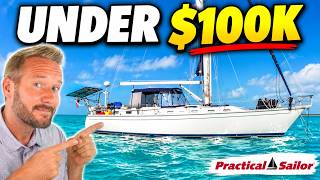
The Beneteau First 456 is a Masthead Sloop designed by German Frers, built by Beneteau from 1982 to the present, with an LOA of 13.9 m and a displacement of 12020 kg. It features a fin keel with a spade rudder and was offered with multiple rig and keel options, including shoal draft, keel/centerboard, and at least three masthead rigs. Aboard *Sailing Solé*, a Beneteau First 456 named *Vanishing Point* completed a 150-mile delivery from Ensenada, Mexico, to San Pedro, California, despite throttle linkage issues and charging failures that required a generator jump-start. During this passage, the crew navigated low-visibility conditions using radar and a FLIR camera due to a fogged isinglass enclosure. Naval engineer Petter Mowinckel owned a Beneteau First 456, which he used for a Caribbean passage starting in 2007.8:07
Fontes
- FIRST 456 (BENETEAU) - SailboatData.com
- First 456 Deep draft (Bénéteau) - Sailboat specifications - Boat-Specs.com
- First 456 : STW002690 : the SailingTheWeb sailboat datasheet
- Beneteau First 456 — Ficha técnica | MundoBarco
- Beneteau First 456: Sailboat Data, In-depth Review & Buying Tips
- First 456 : STW002690 : la ficha técnica de SailingTheWeb
- BENETEAU FIRST 456 Sail Dimensions, Specs & Sail Pricing
- Beneteau First 456 Information, Review, Specs
- First 456 - Beneteau / STW002690
- Occasion BENETEAU FIRST 456 1985 - France Bretagne
- First 456 Shoal draft (Bénéteau) - Sailboat specifications - Boat-Specs.com
- Beneteau First 456 - Sailing Magazine
- Beneteau 456 - opinions / knowledge - Google Groups
- First 456 | Bénéteau heritage - Beneteau
- BENETEAU First 456