Sailing SV Delosvideo
Powering Up Our Dream (FOR THE FIRST TIME!) ⚡️ Aluminum Catamaran Build Pt. 64
April 3, 2026 · 30 min · 289K views
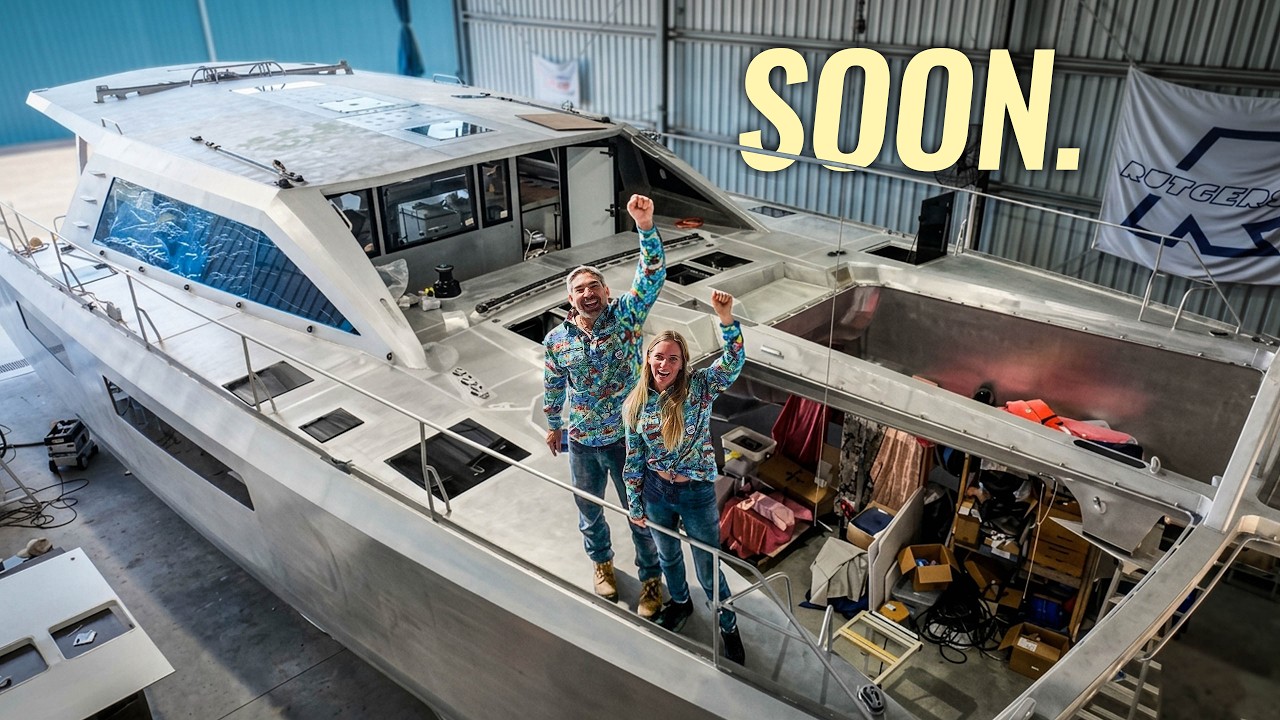
Team celebrates on aluminum catamaran in build shed
What this video covers
After four months of wiring an aluminum catamaran build, the crew of Delos powers up the boat's 48-volt electrical system for the first time and successfully spins one of the electric motors.0:11 The test sequence begins with continuity checks across the positive and negative bus bars, resistance measurements between positive and negative, and isolation checks between both poles and the hull.9:24 A patron specializing in high-current busbar applications recommends follow-up testing with a high-voltage megger and a 10-amp ductor under load; that equipment is ordered but not yet used.12:00 The crew fabricates temporary 70mm² jumper cables to feed the bus bars from test batteries, briefly wires a 12-volt battery into a 48-volt circuit by mistake, then corrects it.19:41 A Victron Smart Shunt comes online showing 53 volts and zero amps at rest.20:13 The 48-volt system requires specially rated contactors, windlasses, and inverters; 12-volt components — navigation systems, water pumps — run on a separate circuit controlled through contactors.14:05 Once the motor controller's control cable is seated correctly, the propeller shaft spins under no load at roughly 100 watts.26:44 Secondary wins include progress on the air conditioning system and welding work.27:18 Further bus bar testing under load remains pending before full commissioning.
More from Sailing SV Delos

From Sailing SV Delos — see the channel’s boat, crew, and every analyzed video.
The Sailing Directory Newsletter
One email with the fleet's best finds — the moments, boats, and stories worth your watch time. Enter your own address to get your own copy.