RAN Sailingvideo
Must-do Steps Before Flipping The Hull! - Ep. 388 RAN Sailing
March 22, 2024 · 22 min · 104K views · Skåne
What this video covers
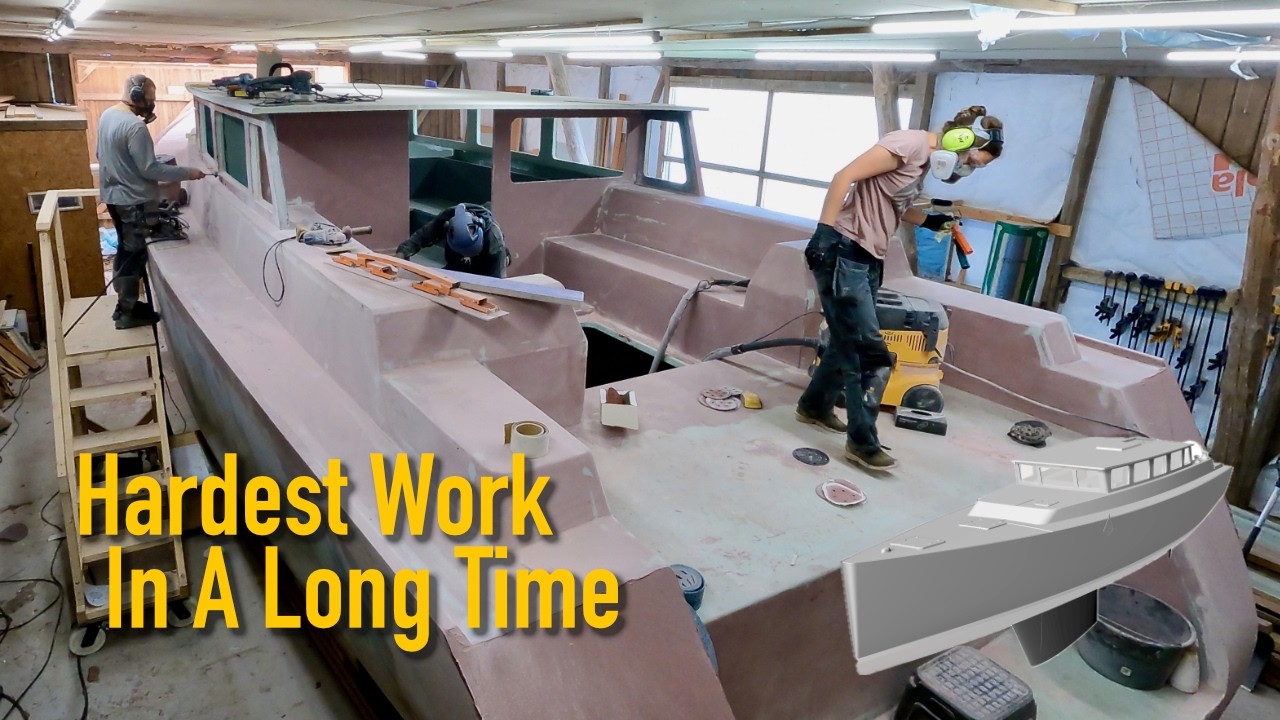
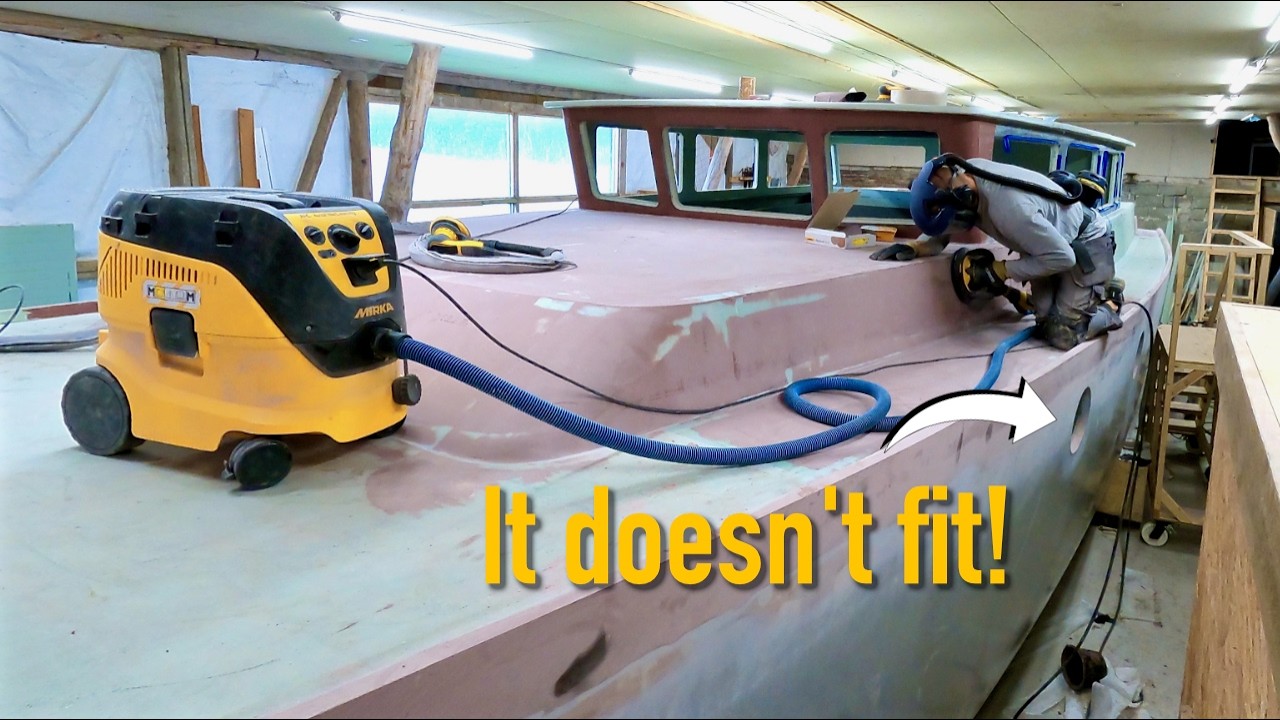
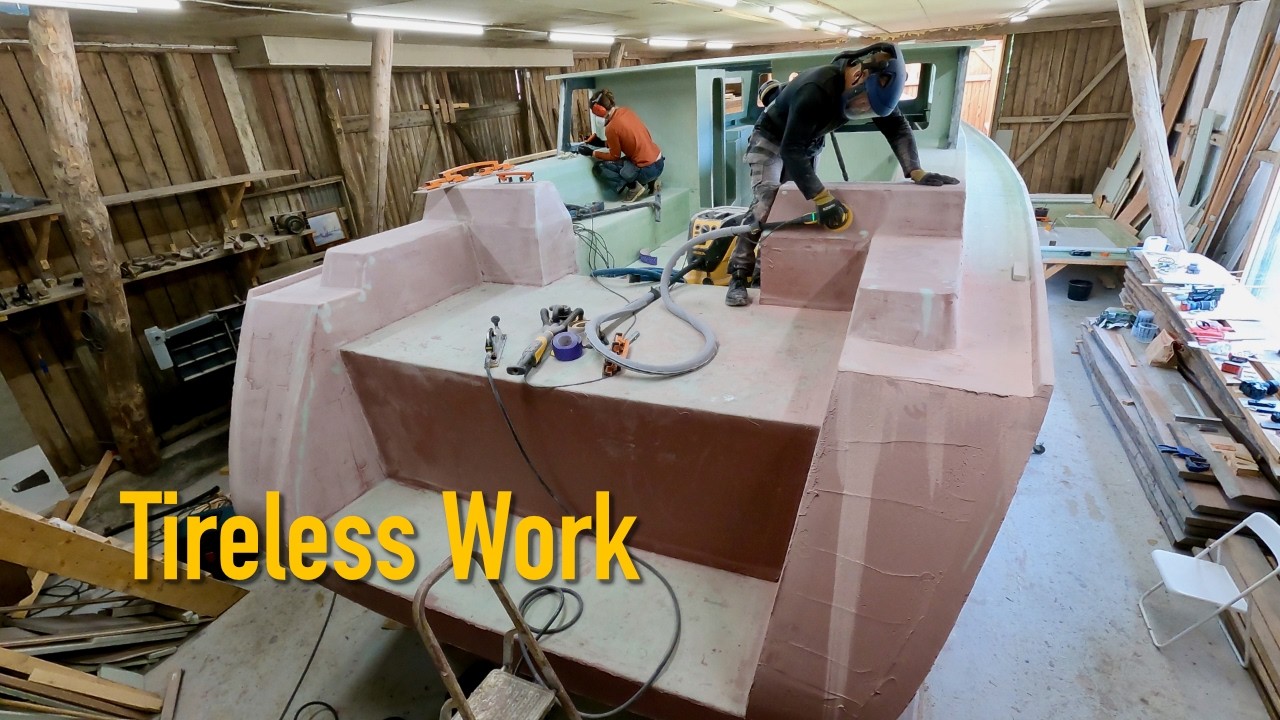
Fairing and sanding the hull of a custom-built boat requires significant quantities of epoxy and filler, with the current project consuming approximately 40 to 50 kilograms of epoxy and 15 kilograms of West System 406 micro-balloon filler to achieve a fair surface.6:46 Working in temperatures as low as 2 to 5 degrees Celsius slows the curing process, necessitating the use of heaters to ensure the epoxy hardens sufficiently for sanding.8:00 The process involves using a random orbital sander to break the surface, followed by a longboard to level the hull.9:21
Before flipping the hull, several structural preparations are required: applying a barrier coat of epoxy to protect the hull from water, creating a physical template of the keel pocket to ensure a precise fit for the keel plate, and constructing sturdy plywood-and-steel cradle boxes to support the 11-to-12-ton vessel.16:34 Additionally, a temporary "roll cage" structure will be built around the hull to facilitate a controlled, two-step rotation during the flip.19:46 These preparations allow for a self-managed, gradual turnover process.21:13
More from RAN Sailing

From RAN Sailing — see the channel’s boat, crew, and every analyzed video.
The Sailing Directory Newsletter
One email with the fleet's best finds — the moments, boats, and stories worth your watch time. Enter your own address to get your own copy.