Investigado a través de fuentes publicadas
La historia del Moody 376
Cómo surgió este modelo, quién lo diseñó, qué cambios hubo durante su producción y qué se ha escrito sobre él desde entonces. Cada afirmación incluye su fuente; ▶ marca el inicio de metraje real de un barco de este modelo.
Moody 376
The Moody 376 is a centre‑cockpit, aft‑cabin cruising yacht that emerged in the mid‑1980s as a refinement of the successful Moody 37 and has since gained a reputation as a capable, comfortable offshore boat in a compact package. It was conceived for serious coastal and blue‑water cruising by couples or families, with an emphasis on seakeeping, robust construction and generous living space rather than outright speed. Built in glass‑reinforced plastic with a fin keel and skeg‑hung rudder, it combines moderate displacement with substantial ballast, giving a notably steady motion and good behaviour in heavy weather for its size. Today the 376 is widely regarded on the brokerage market and in owner communities as one of Moody’s classic centre‑cockpit designs, prized for its aft cabin, two‑heads layout and reassuring feel at sea.
Introduction
The Moody 376 sits at the heart of the 1980s Moody range, bridging the gap between smaller centre‑cockpit cruisers and the larger ocean‑going models of the period. The design was drawn by British naval architect Bill Dixon, working from the earlier Moody 37 hull and superstructure and then subtly reworking the stern to create the sugarscoop transom that defines the 376. The Moody Owners Association records the 376 as an evolution of the 37, identical in hull and rig but distinguished by the integrated bathing and boarding platform and twin transom ports for light and ventilation. As a result, the boat occupies a distinctive niche: effectively the same proven offshore platform as the 37, but with more convenient access to the water and a slightly more contemporary stern profile that appealed to late‑1980s buyers.
Origins and design brief
Records from the Moody Owners Association show the 376 introduced around 1987, with production ceasing in August 1991, fitting neatly into the brand’s drive at that time to offer robust, comfortable cruising yachts with modern layouts and conservative rigs. A French market guide notes construction between 1986 and 1991 and estimates roughly 150 hulls built, illustrating both the limited but significant production run and the typical uncertainty that surrounds exact numbers for boats of this era. Contemporary and retrospective commentary in European sailing media consistently describes the 376 as a solid, well‑finished cruiser intended more for reliability and comfort than for racy performance, echoing the brief that guided many Moody centre‑cockpit designs. In this sense the 376 can be seen as a carefully targeted response to cruising sailors who wanted a yacht under 12 metres that still offered a true aft cabin and the psychological security of a protective cockpit and conservative sailplan.
Construction and variants
Builder data and association records agree that the Moody 376 is moulded in GRP, with a single‑skin hull and GRP decks, using a fin keel and a rudder mounted on a partial skeg for directional stability and protection. Principal dimensions published by the owners’ association give a length overall of 11.53 metres, a waterline length of 9.53 metres, beam of 3.81 metres, and a standard fin‑keel draft of 1.68 metres, figures that are closely echoed in continental buyers’ guides. The same association lists alternative shallow‑draft options, including a shoal fin at 1.37 metres and a lifting‑keel variant drawing about 1.22 metres, a spread that made the design attractive both for deep‑water voyaging and for cruising in tidal or shoal regions. Displacement is recorded at roughly 7,373 kilograms with about 2,950 kilograms of ballast, implying a ballast ratio near forty percent and confirming the designer’s emphasis on stiffness and righting power rather than lightweight performance.
Engine installations on the Moody 376 followed a standard pattern but allowed for notable variation, which has become part of the boat’s trivia among technically minded owners. The specified standard engine was the Thornycroft T80 diesel of around 35 horsepower, with optional Thornycroft T98 and T110 units offering 47 and 50 horsepower respectively for buyers who wanted greater power under way. An Italian technical review notes that the T80 is a marinised version of the Mitsubishi K4D industrial engine, and suggests that equivalent units from Vetus share the same base block, a detail often cited when owners discuss spares and long‑term support. In service, many boats have later been repowered, but the original Thornycroft installations remain part of the 376’s identity as a pragmatic, engineering‑friendly cruiser rather than a yacht built around exotic systems.
Layout above and below deck
Above deck, the Moody 376 is defined by its centre cockpit and its modified stern, which integrates a compact bathing and boarding platform that was absent on the original 37. The cockpit is arranged to be deep and secure, with high coamings and an enclosed feeling that appealed to long‑distance cruisers sailing in northern waters as well as to Mediterranean owners who appreciated the platform for swimming and dinghy handling. The twin transom ports introduced with the 376 bring extra light and ventilation into the aft cabin, an incremental but noticeable improvement over the earlier design that owners and reviewers frequently mention when comparing the two models. Together, these features make the deck plan feel more modern than the underlying mid‑1980s hull might suggest, helping the boat retain aesthetic appeal on today’s used‑boat market.
Below deck the 376 offers a layout that is unusually generous for its length, and this has become one of its main selling points. The owners’ association describes seven berths in two cabins plus the saloon, with a large aft cabin accessed via a passageway that also serves as a useful “workshop” area, a configuration echoed in forum discussions where the space is praised for storage and maintenance access. There are two separate heads compartments, one forward near the forecabin and another to port adjacent to the aft cabin, each supplied with hot and cold pressurised water, which was a notably luxurious arrangement for a production yacht of this size at the time. Published tankage figures indicate roughly 250 litres of fresh water and 204 litres of fuel, capacities that support extended cruising without making the boat excessively heavy or complex to manage.
Performance and capability
From a naval‑architecture standpoint, the Moody 376 is a moderate‑displacement design whose numbers fall in a band that suggests steady, comfortable progress rather than dramatic speed. Theoretical hull speed derived from the waterline length is around 7.5 knots, and practical accounts from brokers and reviewers describe typical cruising speeds near 6 knots under sail or power, which aligns with the expectations for a boat of this size and type. The sail plan is a straightforward masthead sloop; association data lists a mainsail of about 27.36 square metres and a No.1 genoa of roughly 49.61 square metres, for a working sail area in the region of 77 square metres. Taken together with the displacement, this yields a sail‑area‑to‑displacement ratio in the mid‑teens, a figure that sits neatly within the range associated with comfortable cruising yachts rather than light‑air flyers.
Seakeeping and stability metrics reinforce the design’s blue‑water credentials, even as some databases cautiously classify it as best suited to coastal rather than extreme ocean voyaging. Comfort and capsize indices derived from the published dimensions produce values around the mid‑twenties for motion comfort and near two for capsize screening, placing the 376 close to the threshold many sailors use to gauge ocean‑going suitability. Reviewers in European magazines and online archives repeatedly characterise the boat as “stiff” and “well behaved” when pressed, and owners’ comments compiled by forums describe moderate draft, acceptable performance and reassuring manners when reefed down in heavy weather. The availability of a shallower keel option allows owners to trade some pointing ability and ultimate stability for access to thin‑water cruising grounds, a compromise that has undoubtedly widened the design’s appeal across different regions.
Reputation, market and trivia
In the decades since production ended, the Moody 376 has built a reputation that blends solid respect with a touch of cult appreciation among centre‑cockpit enthusiasts. Brokerage descriptions in Europe and Asia often advertise individual boats as “proven bluewater cruisers” and highlight strong construction, offshore capability and liveaboard comfort, reflecting the way the design has actually been used by many long‑term owners. Italian and French reviews emphasise the quality of the joinery, the practicality of the systems and the generous interior volume, portraying the 376 as a boat that prioritises sensible cruising features over showy styling. On the second‑hand market, prices in European listings over the past decade commonly cluster between roughly sixty and eighty thousand euro depending on condition and year, a band that confirms continuing demand without suggesting speculative inflation.
Among sailors, a few small details have become part of the boat’s informal lore. One is the sometimes conflicting published data on where the boat was built: while British archives attribute the construction to Marine Projects in Plymouth, trading under the Moody name, at least one continental guide lists the yard simply as “Moody” and gives the country as Germany, a discrepancy that owners generally treat as a cataloguing error rather than evidence of multiple production sites. Another recurring point of discussion is the engine lineage, with technically minded writers noting the Thornycroft T80’s Mitsubishi origins and the interchangeability of some parts with equivalent Vetus units, a practical curiosity that matters a great deal when keeping a thirty‑year‑old cruiser running smoothly. Forum threads comparing the Moody 37 and 376 routinely praise the aft cabin, the passageway “workshop” and the two‑heads layout, and suggest that these features, together with Moody’s reputation for honest construction, are central reasons the model continues to attract buyers despite its age.
Conclusion
Taken together, the Moody 376’s story is that of a carefully evolved cruising yacht that took a successful mid‑1980s design and refined it with a sugarscoop stern, improved ventilation and a subtly modernised deck plan. Its moderate hull form, conservative rig and substantial ballast have delivered the dependable, easily handled performance that Bill Dixon and Moody were seeking, while the centre cockpit and generous aft cabin have given owners a level of comfort rare in sub‑12‑metre production boats of its era. Although exact production numbers and even some catalogued details remain slightly uncertain, the consensus from associations, testers and brokers is that the 376 is a solid, practical, long‑legged cruiser that rewards care and incremental upgrading rather than radical modification. For sailors looking today at the used‑boat market, it offers not just statistics on paper but a well‑documented track record of real voyages, a distinctive layout and a quietly interesting set of design choices that mark it out as more than just another 1980s family cruiser.
A bordo de la flota
Lo que las tripulaciones que navegan este modelo han mostrado en cámara.
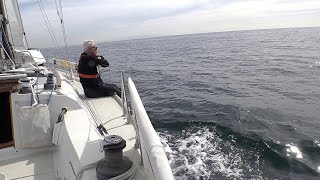
The Moody 376 is a masthead sloop designed by Bill Dixon, built by Marine Projects Ltd. and Moody Yachts from 1985 to 1991. It measures 11.5 meters LOA with a 3.8-meter beam and 1.7-meter draft, displacing 7370 kg. The hull features a fin keel with a rudder on skeg. Aboard *Stella Overboard*, Camille Milligan and Jesse inspected a Moody 376 in Malaysia as part of their search for a sailboat.3:25 They performed a detailed mechanical inspection and confirmed the vessel met their requirements before entering negotiations to purchase a boat named *Stella*. The Moody 376 was offered with Thornycroft diesel engine options, including a standard 35hp T80, an optional 47hp T98, or an optional 50hp T110.
Fuentes
- Moody Owners Association – Moody 376 archive
- Bateau Ouest‑Atlantis – Moody 376 profile
- Yamana Sailing Life – “Moody 376 – Marine Projects”
- Listingsport – Moody 376 review and specs
- YachtWorld UK – 1988 Moody 376 listing
- Yachtsnet – Moody 37 and 376 archive
- YBW Forum – “Moody 37/376 buying advice and alternatives?”