Pesquisado em fontes publicadas
A história do Jouet 22 (Elor 65)
Como este modelo surgiu, quem o desenhou, o que mudou durante a produção e o que as pessoas escreveram sobre ele desde então. Cada afirmação tem a sua fonte; ▶ marca filmagens reais de um barco deste modelo.
Jouet 22 (Elor 65): A Small Elvstrøm Cruiser With A Big Story
Conceived in the mid‑1970s by Olympic legend Paul Elvstrøm and his design partner Jan Kjærulff, the Jouet 22—also marketed as the Elor 65 and Elvstrøm 6.5—married high‑performance dinghy thinking to the emerging French fashion for compact coastal cruisers, producing a remarkably stiff, lively 6.5‑metre keelboat that could still sleep a small family. Built between 1974 and 1979 in roughly three hundred hulls by an interconnected network of yards including Morin, Yachting France, Arcoa and Jouët, the boat’s sharp, bird‑beak bow, fractional sloop rig and fin keel with transom‑hung rudder gave it a distinct personality in harbours from Brittany to the Mediterranean and even in Spanish license‑built versions. Owners and test reports consistently describe a forgiving but responsive helm, strong upwind performance and interior comfort that belies the modest length, albeit with cramped headroom that forces most adults to stoop. Over time, the Jouet 22’s multiple brand names, contradictory published specifications and overlap with the Elor 65 label have made it something of a cult detective story for boat historians, yet beneath the confusion lies a coherent design whose ballast ratio around forty‑four percent, hull speed near 5.7 knots and simple construction in fiberglass polyester earned it a durable reputation as an affordable, seaworthy “mini‑croiseur” of its era.
Origins In The Elvstrøm Design Universe
Paul Elvstrøm And The Turn Toward Cruising
The story of the Jouet 22 begins with Paul Elvstrøm, widely described in French sources as “the greatest racing sailor of all time,” with four Olympic gold medals and an extraordinary tally of nineteen world championship medals, fifteen of them gold. By the late 1960s and early 1970s, Elvstrøm had already cemented his reputation as a dinghy innovator, particularly in Finn and Flying Dutchman classes, but his partnership with designer Jan Kjærulff allowed him to transpose racing ideas into small keelboats for the mass market. In this period European sailors were increasingly seeking compact cabin cruisers that could be trailed or kept on modest moorings, yet still offer credible coastal passages and club racing, creating a fertile context for a 6.5‑metre performance‑oriented cruiser. Elvstrøm and Kjærulff’s designs often favoured fine bows, generous ballast ratios and fractional rigs, allowing relatively small hulls to carry rig power efficiently while remaining controllable for amateur crews, a philosophy that would shape the Jouet 22/Elor 65 concept.
French mini‑cruiser specialists note that the Elor 65 can be recognized instantly by its triangular, very fine bow, described as “thin like a bird’s beak,” an aesthetic and functional hallmark of Elvstrøm’s approach in this size range. A fractional sloop rig offered easier depowering and versatile sail combinations without the complexity of large overlapping genoas, again reflecting dinghy‑derived sensibilities adapted to family cruising. The combination of a fin keel and transom‑hung rudder gave the hull manoeuvrability and a modern underwater profile compared with older long‑keel models, in line with broader 1970s trends toward performance keelboats. All of these ingredients would come together when French yards sought to produce an Elvstrøm‑branded 6.5‑metre cruiser to meet growing domestic demand, leading directly to the Elor 65 and its Jouet 22 reincarnation.
From Elor 65 To Jouet 22
French directories record the Elor 65 as a 6.5‑metre polyester cruiser designed by Paul Elvstrøm and built by the Morin yard, produced from 1974 to 1979 in around three hundred examples. In this guise, the boat carried the name Elor 65 and was positioned in category 3 for French safety rules, indicating suitability for coastal sailing, and typically relied on a 5 to 8 horsepower outboard motor mounted in a stern well or on the transom. Mini‑croiseur historians note that, like another Morin design called Éclair, the Elor 65 later adopted the Jouët branding after Yachting France took a capital stake in the Morin yard, effectively rebadging the same hull as the Jouet 22 for parts of the market. This corporate reshuffling explains why the same basic boat appears under multiple names—Elor 65, Jouet 22, Elvstrøm 6.5—across different catalogues, sometimes even with slightly different sail‑area and displacement figures attached.
A French “choisir un bateau” site lists the Jouet 22 itself as built by Yachting France, also between 1974 and 1979, in three hundred units, with the same core hull dimensions of 6.5 metres length, 5.45 metres on the waterline, and 2.35 metres beam as the Elor 65 entry. An international sailing directory confirms this timeline, describing the boat, under the Jouet 22/Elor 65/Elvstrøm 6.5 labels, as designed by Paul Elvstrøm and Jan Kjærulff and built from 1974 to 1979 by Yachting France, Arcoa and Jouet, with license‑built examples in Spain. The multiplicity of builders reflects a pattern whereby a successful small design could be produced under license or through corporate linkages, allowing regional yards to serve their local markets while maintaining a common hull and rig architecture. As Yachting France consolidated its presence, rebadging the Elor 65 to Jouet 22 gave the model a more coherent identity in certain catalogues, even though sailors and advertisers continued to use the names interchangeably.
The relationship between brand names also reveals something about marketing strategies in 1970s France, where “Jouet” became a recognizable marque for accessible family cruisers, while “Elvstrøm” signalled performance pedigree to racing‑oriented buyers. By attaching Elvstrøm’s name and design office to the underlying concept while adopting Jouet branding for distribution, builders could speak simultaneously to aspirational racers and budget‑conscious coastal cruisers. That dual identity persists into the present, where sailmakers market replacement mainsails under labels such as “ELOR 65 – JOUET 22,” acknowledging that owners of the same hull may consider themselves guardians of either name.
Not To Be Confused With The J/22
One persistent source of confusion in English‑language discussions arises from the similar numerical designation of the Jouet 22 and the J/22, an American Rod Johnstone design first built in 1983 and widely known as a one‑design racer. The J/22 is a fiberglass monohull with a fin keel, transom‑hung rudder and fractional sloop rig, superficially similar in concept but distinct in dimensions, displacing about 812 kilograms with 318 kilograms of lead ballast and measuring 6.86 metres overall with a beam of 2.44 metres. Its development chronology, eighties one‑design racing focus and different builder lineage make it a separate species from the mid‑seventies Elvstrøm 6.5 metre family, despite the shared “22” label. For sailors browsing international databases, it is therefore important to distinguish the French‑Danish Jouet 22/Elor 65 compact cruiser from the later American J/22 sportsboat, each notable in its own right but unrelated in origin.
This numerical overlap highlights how class naming conventions in the sailboat world can be deceptively simple, often masking very different design intentions under similar lengths or round numbers. It also underscores the importance of cross‑checking builder, designer and production years when interpreting any “22‑footer” reference, particularly in online marketplaces where abbreviations and mistranslations can blur distinctions between Jouet, J/Boats and other brands. For the purposes of this report, “Jouet 22” refers exclusively to the Elvstrøm‑designed 6.5‑metre fractional sloop produced in France and under license abroad from 1974 to 1979, also marketed as Elor 65 and Elvstrøm 6.5 in various catalogues.
Design And Construction: Hull, Rig And Keel
Hull Form And Underwater Profile
Across multiple French and international registries, the Jouet 22/Elor 65 is consistently described as a monohull constructed in fiberglass polyester, with a fin keel and transom‑hung rudder. The hull length is given as 6.5 metres, with a waterline length around 5.45 metres and a beam between 2.35 and 2.4 metres, producing a relatively slender planform compared with some contemporary beamy mini‑cruisers. The fine, triangular bow noted by French mini‑cruiser writers contributes to a sharp entry that reduces pounding in chop, while the moderately flared topsides and transom allow usable interior volume and deck space without excessive beam. A fin keel, rather than a long keel, reduces wetted surface and enhances manoeuvrability, especially when combined with the transom‑mounted rudder that gives a direct feel at the tiller.
Published data from an Elvstrøm 6.5 technical sheet list a maximum draft of 1.35 metres for the standard fin‑keel version, while some Jouet 22 entries cite two possible drafts, 1.35 or 1.50 metres, suggesting that deeper‑keel variants or slight yard differences existed. Another specification source describes a shallow version with 1.35 metres draft and a deeper version at 1.5 metres, reinforcing the notion of at least two keel options based on intended sailing grounds. Independent sailboat reviews mention a fixed‑keel configuration with a draft as low as 1.10 metres, alongside a lifting‑keel (dériveur lesté) version, implying that some boats were built or modified with more shoal‑friendly setups than the original Morin/Yachting France catalogues indicate. A generalist yachting database, summarizing the model for casual buyers, notes that the Jouet 22 can enter shallow marinas thanks to a draft of roughly 1.33 to 1.43 metres depending on load, aligning with the idea of a relatively modest keel depth for a 6.5‑metre coastal cruiser.
This spread of draft figures illustrates one facet of the Jouet 22’s complexity: over several years and multiple builders, small variations in keel casting, ballast placement and possible lifting‑keel adaptations produced subtly different underwater geometries while staying within Elvstrøm’s intended envelope. Regardless of specific draft, the fin keel concentrates ballast low and relatively close to the hull’s centreline, contributing to a high ballast‑to‑displacement ratio and strong initial stability. The transom‑hung rudder, suspended on gudgeons instead of skeg‑mounted, further reduces drag and simplifies construction and maintenance, albeit at the cost of less rudder protection compared with skeg designs. In practice, owners report that this combination makes the boat agile and light on the helm, with good control in tight harbours and responsiveness under sail, particularly in upwind work.
Rig: Fractional Sloop Power On A Compact Platform
The Jouet 22 is rigged as a fractional sloop, often described as a 7/8 rig, with a single spreader mast and standing rigging supporting a moderate sailplan. Detailed rig measurements from a technical listing give a mainsail luff (P) of about 8.3 metres and foot (E) of 2.5 metres, while the foretriangle height (IG) is approximately 7.44 metres with a base (J) of 2.59 metres, yielding a total upwind sail area around 20 square metres when expressed as 215 square feet in square‑foot notation. Another set of published figures for the Jouet 22 shows sail area at roughly 18.5 square metres, whereas Elor 65 entries list a larger total of 28.15 square metres, including a mainsail of 12.95 square metres and genoa of 15.2 square metres, and one international specifications database records an even higher number around 25 square metres. A French sailmaker advertising a semi‑battened cruising‑racing mainsail for “ELOR 65 – JOUET 22” lists a replacement mainsail area of about 11.83 square metres, consistent with the idea that headsails account for the remainder of the upwind triangle.
These divergent sail‑area numbers likely reflect differences between original standard sails, optional larger genoas for club racing, and later owner‑driven re‑rigging, rather than fundamental changes to mast position or hull. When translated into ratios, one data set gives a sail‑area‑to‑displacement ratio of about 17.3 and a ballast‑to‑displacement ratio near 44.3 percent for the Jouet 22, placing it firmly in the category of moderately powered but stiff small cruisers rather than under‑rigged family boats. A specialized directory repeats these ratios and calculates a hull speed of roughly 5.67 knots from the 5.45‑metre waterline, consistent with classical displacement theory and the near‑identical figure of 5.7 knots cited by another generalist yachting database. The fractional rig makes reefing and headsail‑selection especially important: one owner‑experience summary notes that the helm remains responsive but benefits from early reefing once wind exceeds 15–18 knots to keep heel angles comfortable for crew and passengers.
The rig’s modest overall height and fractional geometry also serve practical considerations in this size bracket. Keeping the centre of effort low and within easy reach of cruising sailors reduces stress on rigging and eases handling when short‑handed, while the small foretriangle can carry a range of jibs or genoas without becoming unwieldy. A symmetrically‑cut spinnaker is documented in one sail catalogue, with recommended apparent‑wind angles between 120 and 180 degrees, indicating that the boat was equipped or could be equipped for downwind racing in club fleets. Combined with the hull’s relatively narrow beam and generous ballast, the rig enables the Jouet 22 to behave more like a scaled‑down fast cruiser than a purely sedate pocket yacht, aligning with Elvstrøm’s performance DNA.
Materials And Structural Choices
Construction descriptions across French directories and technical datasheets identify the hull material as polyester, meaning glass‑reinforced plastic, with fiberglass cloth and mat laminated in resin to form the hull shell. One data source explicitly lists “fiberglass” as the construction medium for the Elvstrøm 6.5 variant, confirming that the various brandings all refer to a GRP hull rather than wood or metal. The use of fiberglass allowed builders like Morin and Yachting France to produce hulls at relatively low cost while maintaining consistent shapes via moulds, an essential factor in achieving a few hundred units of production in five years. Decks were likewise moulded, typically bonded to the hull with mechanical fasteners and adhesives, and finished with non‑skid patterns and wooden trim in the cabin, standard practice in the 1970s coastal cruiser market.
Published displacement figures vary somewhat, with many sources giving 1,275 kilograms for the Jouet 22/Elor 65, while one Elvstrøm 6.5 sheet lists a lower displacement around 1,141 kilograms, and another technical database reports roughly 1,240 kilograms. Ballast is generally recorded at 565 kilograms, yielding ballast ratios near 44 percent at the higher displacement figures, though one German‑language registry specifies 1,246 pounds of iron ballast in a 2,811‑pound total displacement, aligning with the 565/1,275 kilogram relationship after conversion. The hull thus carries almost half its weight as ballast in the fin keel, a configuration that promotes high stiffness and resistance to knock‑down, as reflected in capsize screening ratios around 2.19 and comfort ratios near 15 in one published analysis. Such figures suggest a boat that, while lively, maintains a reassuring righting‑moment profile for its size, an impression echoed in owner testimonials about its forgiving nature.
Interior joinery and layout are less systematically documented, but French directories describe a polyester hull with simple cabin fittings and four to five berths, while one technical sheet lists a standard version with one cabin, zero separate toilets and four beds. This implies a basic liner or structural interior supporting bunks and minimal furniture, typical of mini‑cruisers where weight control and cost containment trump elaborate joinery. The structural choices, in short, reflect the boat’s purpose: to offer a strong, stiff platform with modern hydrodynamics and adequate but not luxurious accommodation, built in materials and methods that allowed mid‑market pricing and modest maintenance demands.
Variants, Specifications And Production Numbers
Reconciling Conflicting Specifications
The Jouet 22/Elor 65 family is unusually rich in conflicting published numbers, a fact that has intrigued and occasionally frustrated boat historians trying to pin down “canonical” specifications. Core dimensions such as length overall, beam and waterline length show remarkable consistency: multiple French directories and international sail‑trim sites agree on an LOA of 6.5 metres, waterline length about 5.45 metres and beam around 2.35 metres, making these the most reliable baseline measurements. Draft, displacement and sail area, by contrast, diverge across sources, reflecting variations in keel options, possible hull‑weight measurement conventions and changes in sail wardrobes during and after production.
A French directory entry for the Jouet 22 lists displacement at 1,275 kilograms, ballast at 565 kilograms and sail area at 18.5 square metres, with draft either 1.35 or 1.50 metres depending on version. The corresponding Elor 65 entry, likely describing the same hull under its earlier branding, gives identical displacement and ballast but records a larger sail area of 28.15 square metres, broken down into 12.95 square metres for the mainsail and 15.2 square metres for the genoa, while retaining the 1.35/1.50‑metre draft options. An Elvstrøm 6.5 technical sheet posts a displacement of 1,141 kilograms, ballast still 565 kilograms and a maximum draft of 1.35 metres, with hull speed 5.67 knots computed from a 5.45‑metre waterline, numbers that suggest a lighter hull or perhaps differences in what was included in the weight measurement. One specifications database labels the Jouet 22’s displacement as 1,275 kilograms and calculates sail‑area‑to‑displacement and ballast ratios that assume roughly 20 square metres of sail area drawn from a 215‑square‑foot figure, while another gives 25 square metres of sail area and a slightly different displacement of 1,240 kilograms.
These discrepancies can be understood as snapshots taken from different points in the boat’s life cycle and across different measurement standards. It is plausible that early Morin‑built Elor 65 hulls were slightly lighter, that some Yachting France or Jouet‑badged versions gained modest weight through interior modifications or hardware changes, and that sail wardrobes varied between basic cruising sets and larger headsails supplied to more race‑minded owners. Draft variations could reflect different keel castings, trimming adjustments and, in some cases, the presence of a lifting‑keel or shoal‑keel variant aimed at shallow‑water sailing grounds. Rather than imposing a false precision, responsible reporting acknowledges this range: the Jouet 22/Elor 65 can reasonably be described as a 6.5‑metre GRP cruiser displacing between about 1,140 and 1,275 kilograms, carrying roughly 565 kilograms of ballast, drawing between 1.1 and 1.5 metres depending on keel, and carrying on the order of 18 to 28 square metres of upwind sail area depending on rig and sail choices.
A comparative look suggests that the most frequently cited numbers for displacement and ballast, 1,275 and 565 kilograms respectively, probably reflect a widely adopted standard, since they appear across both Jouet 22 and Elor 65 entries and are echoed in international directories and ratio calculations. Sail area is more context‑dependent, with racing‑oriented Elor 65 data leaning toward the higher 28‑square‑metre figure and general cruising descriptions of Jouet 22 favouring values around 18.5 to 20 square metres. For many practical purposes—such as understanding performance potential and relative stiffness—the ratios computed from the 1,275/565 kilogram and approximately 20‑square‑metre figures provide a reasonable picture of the design’s behaviour. But the existence of multiple credible sets of numbers remains part of the boat’s story, reflecting the fluid interface between design intent, yard practice and owner modification in a lively period of small‑boat evolution.
Production Years, Builders And Geographic Spread
On the question of production years and total units, sources converge more tightly. Both Jouet 22 and Elor 65 entries in a French boat‑choice directory state that the model was built from 1974 to 1979, with three hundred units produced in each case. A mini‑cruiser history similarly reports that the Elor 65, launched in 1974, sold in “more than 300 examples,” implicitly aligning with the rounded figure of three hundred hulls often quoted in directories. An international sailing directory summarizing the Jouet 22/Elor 65 notes that the boat was built from 1974 to 1979 by Yachting France, Arcoa and Jouet, and adds that it was built under license in Spain, indicating a geographic spread beyond the French domestic market. A French listings site echoes the 1974–1979 dates and uses an approximation of “about 300 hulls,” reinforcing the consensus around this production scale.
The builders named—Morin, Yachting France, Arcoa and Jouet—reflect a specific landscape of French yards involved in small cruisers during that decade. Morin appears as the yard associated with the Elor 65 branding, while Yachting France is linked directly to the Jouet 22 name, with some sources implying that Jouet became the branding after Yachting France entered Morin’s capital. Arcoa, another yard active in fiberglass boats, is mentioned in one directory as a builder of the Elvstrøm 6.5, suggesting use of the design under license or subcontract, and the Jouet brand itself, connected with Yachting France in some registries, may have acted as a label that grouped several models under a common marketing umbrella. Together, these yards produced a few hundred hulls in total, and the Spanish license‑built examples extended the boat’s reach to Iberian coasts, though detailed numbers for Spain are not documented in the available sources.
For sailors encountering Jouet 22s in today’s used‑boat market, this manufacturing history means that individual examples may trace back to different original yards, each with subtle differences in fit‑out and finish, even if the underlying hull mould and rig design remain consistent. The relatively small total production, in the hundreds rather than thousands, has made the boat a niche but not rare presence in French marinas, with enough units to sustain a modest second‑hand market but not so many that it becomes ubiquitous. Its multiple names and builder associations also contribute to a certain mystique, as prospective buyers must sometimes decode whether a broker’s “Elor 65,” “Elvstrøm 6.5” or “Jouet 22” listing refers to the same design family or to a close cousin.
Comparing Jouet 22 And Elor 65 Entries
A clear illustration of the branding and specification interplay can be drawn from the contrasting Jouet 22 and Elor 65 entries in one French directory, which list nearly identical dimensions but different sail areas. Both entries give hull length at 6.5 metres, waterline length at 5.45 metres, beam at 2.35 metres, weight at 1,275 kilograms, ballast at 565 kilograms and draft options of 1.35 or 1.50 metres, as well as four to five berths and headroom between 1.55 and 1.6 metres. The Jouet 22 entry lists sail area at 18.5 square metres and a set of performance ratios such as V/P (sail area/weight) at 15, L/V (ballast/sail area) at 31 and LP (ballast/weight) at 0.44, indicative of a moderate sailplan. The Elor 65 entry, in contrast, records sail area at 28.15 square metres, with mainsail and genoa broken down, and gives higher ratios like V/P at 22, L/V at 20 and LP also at 0.44, reflecting a more power‑oriented rating perspective.
Despite this difference in sail area, both entries assign the same category 3 safety classification and similar “Groupe HN” handicap group between 6 and 7, situating the boat in a particular French rating band. This suggests that from a handicap‑racing standpoint, the Elor 65 data may assume maximum racing sails, while the Jouet 22 listing reflects more typical cruising canvas. Yet the consistency in hull, ballast and draft numbers across the two entries supports the conclusion that they describe the same underlying design, refracted through slightly different usage scenarios. For modern sailors, the lesson is straightforward: when evaluating a Jouet 22 or Elor 65 on the market, pay close attention to the actual sails fitted and their age, recognizing that the hull can handle both modest and more generous rigs depending on how ambitiously one intends to sail.
Performance, Handling And Seakeeping
Ratios And Theoretical Performance
Numerical ratios published in sailboat directories offer a quantitative window into how the Jouet 22 behaves at sea. Using a displacement around 1,275 kilograms and sail area of about 215 square feet, one listing computes a sail‑area‑to‑displacement ratio of 17.27, a ballast‑to‑displacement ratio of 44.33 and a displacement‑to‑length (D/L) ratio of 219.54, along with a comfort ratio of 15.11 and a capsize screening value of 2.19. These ratios place the boat in a category of moderate to moderately high sail power for its weight, substantial ballast for stiffness, and a relatively high D/L indicative of a classic displacement hull rather than an ultra‑light flyer. The comfort ratio, while not high compared with larger cruisers, is typical for compact boats that inevitably have more rapid motion but can still be tolerable in coastal conditions, and the capsize screening number below 2 indicates a reasonably safe stability envelope for short‑offshore passages in its size range.
Hull speed is computed from the waterline length of 5.45 metres and appears consistently as about 5.67 to 5.7 knots across both Elvstrøm 6.5 and Jouet 22 entries, representing the theoretical maximum speed before the boat must begin planing or expending disproportionate energy to climb its bow wave. A generalist yachting database echoes this figure and frames it as the “theoretical maximal speed of a displacement boat of this length,” reinforcing the notion that, while quick for its size, the Jouet 22 remains a displacement cruiser rather than a planing dinghy. The ballast ratio around forty‑four percent suggests that the boat will stand up relatively well to its rig, with less tendency to excessive heel compared with very lightly ballasted small cruisers, although the narrow beam does mean that heel angles can still build quickly under full canvas.
Comparing these ratios to contemporaries in the mini‑cruiser class indicates that the Jouet 22 sits on the lively side of the comfort spectrum, offering rewarding performance particularly upwind, at the cost of somewhat brisk motion in a seaway. For sailors prioritizing sportier handling and the ability to carry sail with confidence, the high ballast fraction and moderate sail‑area ratio can be seen as advantages, creating a boat that is neither under‑powered nor excessively tender. For purely comfort‑oriented coastal pottering, however, the motion characteristics and need for active sail management—reefing as winds build into the high teens—require a willing and engaged crew.
Owner Reports: Forgiving, Stiff And Upwind‑Oriented
In aggregated owner reviews, the Jouet 22 is frequently characterized as forgiving yet surprisingly stiff for its size, a trait attributed specifically to the high proportion of weight carried as ballast in the fin keel. One review summary notes that the boat’s helm is responsive, with a pleasant feel, but benefits from early reefing around 15–18 knots of wind to maintain comfortable heel angles and reduce strain on inexperienced crew, advice consistent with the boat’s lively ratio profile. Another owner‑focused article featuring a Jouet 22 named “Sun Hill” describes the boat as very pleasant to steer and highly performant upwind, while offering exceptional habitability relative to its 6.5‑metre length, a combination that evidently impressed its crew. These paraphrased impressions align neatly with Elvstrøm’s design philosophy: create a hull that excels upwind and rewards skilled helmsmanship, while still forgiving enough for coastal cruising families.
The boat’s stiffness is also supported by numerical ballast ratios and qualitative remarks in reviews that praise its ability to “stand up” to its sails, even when reefing is delayed. A German‑language technical listing emphasizes that forty‑four percent of the boat’s weight is ballast, explicitly calling it “stiff” and noting that it stands up well to its sails, a succinct characterization of the design’s core virtue. For small‑boat sailors, this stiffness translates into a sense of security when beating into chop or encountering gusts, as the keel’s righting moment counters heeling and reduces the likelihood of sudden knock‑downs. At the same time, the relatively narrow beam and modest freeboard mean that motion in steep waves can be energetic, reminding crews that this is a 6.5‑metre boat, not a heavy displacement cruiser.
Downwind and reaching performance receive less explicit commentary in the available sources, but the presence of documented symmetrical spinnaker dimensions and recommended apparent‑wind angles suggests that the Jouet 22 was used enthusiastically in club racing and coastal rallies, where its fractional rig and responsive rudder would make it an engaging boat to sail off the wind. The hull’s fine bow, while primarily contributing to smooth upwind entry, also helps prevent excessive burying in waves when sailing fast on reaches, particularly under spinnaker, by slicing more cleanly through wave fronts. Overall, owner reports paint a picture of a boat that shines upwind, remains predictable and forgiving if reefed appropriately, and offers enough fun off the wind to satisfy sailors seeking more than sedate cruising.
Shallow‑Water Capabilities And Keel Options
One practical aspect of performance lies in the boat’s ability to access shallow waters and small harbours. A generalist yachting review points out that the Jouet 22 can enter even shallow marinas thanks to its draft of about 1.33 to 1.43 metres, making it more versatile than deeper‑keel racing designs in the same nominal length bracket. An owner‑experience summary notes that the boat was offered in two primary configurations: a fixed‑keel version with a draft of around 1.10 metres and a lifting‑keel (dériveur lesté) version, whose keel mechanism requires regular maintenance but offers excellent shallow‑water versatility. French directories confirming standard drafts of 1.35 or 1.50 metres for the Elor 65/Jouet 22 variants suggest that some boats were indeed built with deeper keels, potentially favouring performance over access in certain waters.
The lifting‑keel version introduces its own handling characteristics. With the keel raised, the boat’s centre of gravity rises and stability diminishes, making it suitable only for sheltered waters and low‑speed manoeuvres, while lowering the keel restores full ballast leverage for sailing. Owners and reviewers caution that the lifting mechanism, like all moving underwater components, requires regular inspection and maintenance, and can be more demanding to keep in perfect working order than a simple fixed keel. Nonetheless, for sailing grounds with extensive sandbanks, drying moorings or river shallows, the ability to reduce draft can be invaluable, broadening the boat’s practical cruising range beyond the deeper harbours favoured by pure racing keelboats.
In everyday use, even the fixed‑keel versions benefit from their relatively modest draft. Being able to approach closer to shore, tuck into shallow coves and use smaller berths without constant fear of grounding adds a layer of convenience and safety, particularly for novice cruisers. This aspect of the Jouet 22’s design underscores its dual nature: while clearly performance‑influenced, it remains grounded in the realities of coastal cruising, where access and forgiveness matter as much as hull speed.
Interior, Habitability And Use As A Cruiser
Layout And Headroom
Interior documentation for the Jouet 22/Elor 65 is less exhaustive than the hydrodynamic data, but French registries and owner accounts provide a coherent picture of a compact yet thoughtfully organized cabin. The Jouet 22 entry in a French directory lists five berths, while the Elor 65 entry records four to five berths and headroom of about 1.6 metres, suggesting that the cabin can accommodate a small family or group of friends on overnight trips, albeit with limited standing space. A sailing‑the‑web datasheet describes the boat as a cabin cruiser rigged as a sloop, with a standard layout comprising one cabin, no separate toilets and four beds, confirming its minimal but functional accommodation. An owner report describes height under the beams of 1.60 metres for a 6.50‑metre length, praising the boat’s habitability as exceptional for its size despite the need to stoop.
Inside, the typical arrangement would consist of a V‑berth in the forepeak, two settee berths in the main cabin and possibly a small quarter berth or convertible space, all served by simple stowage lockers and a compact galley area. The absence of a dedicated enclosed head in some layouts again reflects the boat’s mini‑cruiser ethos: short coastal trips, weekend excursions and simple camping‑style comfort rather than extended live‑aboard cruising. The limited headroom means most adults must move under the cabin roof in a crouched posture, a trade‑off made to keep the topsides low and windage modest while still offering adequate bunks and seating. Owner‑experience compilations note this as a common criticism: headroom is “limited,” requiring a crawling or stooping mobility inside, which some sailors accept cheerfully and others may find wearing over longer stays.
Despite these constraints, the cabin has won praise for feeling roomy relative to the hull’s length. One owner‑focused piece emphasizes that habitability is exceptional for a boat of 6.5 metres, highlighting the clever use of space in creating four sleeping places and a functional living area. For families stepping up from open dinghies or dayboats, the Jouet 22’s cabin would have represented a significant upgrade, offering shelter from weather, the ability to cook simple meals and the comfort of proper berths for children and adults, all within a manageable size and cost. This role as an “entry‑level coastal cruiser with surprising interior volume” emerges as a recurring theme in both French directories and modern owner reviews.
Cruising Role And Typical Use
Modern commentaries describe the Jouet 22 as an affordable, seaworthy entry into coastal cruising, aimed at sailors who want to take their first steps beyond day sailing into overnight or weekend voyages. With its fractional rig, robust ballast ratio and modest draft, the boat offers a reassuring platform for short passages along sheltered coasts, estuaries and near‑shore routes, while retaining enough performance to satisfy those who enjoy spirited sailing and club racing. One sailing‑the‑web datasheet explicitly classifies the model as a cabin cruiser for cruise, underscoring its intended use as a trip boat rather than a pure racer or long‑distance offshore vessel.
In practice, owners seem to have used the boat for a mixture of purposes: low‑key cruising with family or friends, participation in local handicap regattas, and day sailing with occasional overnight stays. The presence of symmetrical spinnaker options and documented handicap groupings in French rating tables suggests that the Jouet 22 saw use on racecourses, where its upwind performance and lively response would have been assets. At the same time, the modest comfort ratio and compact cabin emphasize that its natural domain is coastal waters, with occasional forays offshore in favourable conditions and competent hands, rather than extended bluewater voyaging.
Maintenance and upgrade patterns further illustrate its role. Owner reviews note that original 1970s hardware may require updating to modern safety standards, including lifelines, deck fittings and sometimes rigging, implying that many Jouet 22s remain in active use decades after construction and are subject to ongoing refurbishment. The lifting‑keel variants, in particular, demand attention to keel mechanisms, winches and pivot points to ensure smooth operation and avoid corrosion issues, a factor that can influence a buyer’s choice between fixed and lifting keels. Yet the underlying hull and structural integrity of the fiberglass construction have proven sufficiently robust that many boats continue sailing as economical small cruisers for new generations of owners.
Comfort Trade‑Offs And Owner Expectations
One owner‑experience summary highlights a set of pros and cons that encapsulate the Jouet 22’s comfort profile. On the positive side, the boat’s high stability and forgiving handling favour beginners, the lifting‑keel version offers excellent shallow‑water versatility, the relatively large production run yields a steady supply of used boats, and the interior provides a spacious four‑berth arrangement for its length. On the negative side, limited headroom forces a crawling mobility inside, lifting‑keel mechanisms require regular and sometimes difficult maintenance, and original 1970s hardware may need upgrading to meet modern standards of comfort and safety. These trade‑offs make the boat particularly attractive to sailors willing to invest sweat equity and thoughtful upgrades in exchange for a capable, characterful mini‑cruiser at a modest purchase price.
The comfort profile also intersects with sailing grounds and cultural expectations. In French Atlantic and Mediterranean contexts, where marina infrastructure and weather patterns favour frequent short trips, a 6.5‑metre boat with good performance and modest interior comfort can provide an ideal platform for weekend exploration, teaching children to sail and participating in local regattas. In colder or more exposed regions, sailors might prefer larger, heavier boats for overnight use, making the Jouet 22 more likely to serve as a daysailer or club racer. The boat’s ability to straddle these roles—neither purely spartan nor indulgently comfortable—gives it a particular niche in the spectrum of small cruisers.
Legacy, Trivia And The Boat’s Place In Sailboat History
A Mini‑Cruiser With Elvstrøm Pedigree
The Jouet 22’s legacy rests partly on its association with Paul Elvstrøm, whose racing achievements and design work confer a certain prestige even on relatively humble production boats. For owners, knowing that their compact cruiser shares DNA with designs conceived by a four‑time Olympic champion adds intangible value and fosters pride in the boat’s lineage. The involvement of Jan Kjærulff further anchors the design within a professional naval‑architecture framework, rather than the ad‑hoc adaptations sometimes seen in small‑yard boats of the era. This pedigree, combined with a tangible record of solid performance and seaworthiness, has supported the boat’s continued appeal among enthusiasts seeking a small cruiser with “real designer” credentials.
At the same time, the Jouet 22 remains a fundamentally accessible boat. Its production numbers, around three hundred hulls, and its mid‑market construction materials place it far below the realm of rare, expensive custom yachts, making it attainable for ordinary sailors. This duality—elite design heritage housed in an affordable fiberglass hull—contributes to its charm and ensures that stories about the boat often blend technical admiration with affectionate accounts of family cruises, amateur refits and local regattas. Mini‑cruiser specialists classify it among a generation of French compact cruisers that opened coastal sailing to wider audiences, democratizing the pleasures of cabin‑equipped sailing in the 1970s.
Bird‑Beak Bow And Visual Identity
One of the boat’s most distinctive visual features is the sharp, triangular bow profile, described by French writers as “fine like a bird’s beak.” This aesthetic detail does more than catch the eye: it reflects Elvstrøm’s interest in fine entries to reduce wave impact and promote smooth upwind motion, features familiar from his dinghy designs. For sailors, recognizing an Elor 65 or Jouet 22 on a mooring field often begins with this bow shape, followed by the fractional rig and compact cabin trunk, creating a readily identifiable silhouette even among other small keelboats.
The bow’s fine lines make for appealing photography, as seen in owner‑submitted images of boats like “Sun Hill,” where the hull’s sleek forward shape contrasts with the more rounded forms of some contemporaries. Sailmakers and directories also capitalize on this visual identity, pairing technical sail data with side‑profile drawings that emphasize the hull’s slender forefoot. Over time, this bird‑beak bow has become part of the boat’s lore, a shorthand for its mixture of elegance and practicality, and a reminder of the design’s racing roots even when laden with cruising gear.
Names, Markets And The Elor/Jouet Transition
The boat’s multiple names—Elor 65, Jouet 22, Elvstrøm 6.5—constitute a small puzzle that has attracted attention among boat historians and curious owners. Mini‑cruiser commentators recount that Elor 65 was the original name under the Morin yard, and that the boat adopted the Jouet branding after Yachting France entered Morin’s capital, mirroring the path of another model called Éclair. International directories consolidate these labels by listing “Jouet 22 (Elor 65)” or “Elvstrøm 6.5” in a single entry, acknowledging that websites, yard records and sailmakers still refer to the same hull under different designations.
This naming history sheds light on business dynamics rather than purely technical changes. As Yachting France and its associated brands sought to build stronger market recognition, aligning small cruisers under the “Jouet” label allowed advertising and catalogues to present a unified image, while retaining references to Elor and Elvstrøm where racing pedigree was particularly valued. The Spanish license‑built versions further complicated the picture, as local markets may have favoured one name over another, possibly adapting branding to regional preferences. For the modern sailor, however, all three names point back to the same essential design, and the multiplicity of labels adds a layer of historical texture rather than real confusion once deciphered.
Sailmakers, Aftermarket Support And Longevity
The presence of contemporary sailmakers offering tailored sails for the “ELOR 65 – JOUET 22” is a telling sign of the boat’s enduring footprint. A French loft advertises semi‑battened cruising‑racing mainsails in modern warp‑drive cloth for the model, listing specific areas and encouraging owners to update performance while respecting original rig dimensions. Such offerings demonstrate that enough boats remain active to sustain a niche aftermarket for dedicated sail packages, rather than leaving owners to rely solely on generic small‑boat sails. Other technical sites similarly compile rig measurements for the model, supporting owners who wish to source new sails or tune rigs according to class‑based data.
Technical directories supplying dimensions, ratios and rig data for the Elvstrøm 6.5 likewise contribute to longevity by helping sailors evaluate and compare the boat to other candidates in the used‑boat market, reinforcing its position as a recognizable design rather than an obscure one‑off. The continued presence of Jouet 22s and Elor 65s in marinas, regattas and classified ads suggests that the combination of sound construction, engaging performance and practical size has preserved the boat’s relevance long after its production run ended. For many owners, the boat’s age invites continuous tinkering—updating hardware, fitting new sails, modernizing electrics—turning the Jouet 22 into a long‑term project as much as a mere vehicle, and weaving it into personal sailing histories as deeply as its original design story.
Comparison With Later Small Keelboats
While direct one‑to‑one comparisons are beyond the scope of the available sources, some contextual pointers help situate the Jouet 22 within broader sailboat history. The later J/22, for instance, embodies a more race‑centric approach in a similar nominal length, with a higher sail‑area‑to‑displacement ratio and flatter decks aimed at one‑design regattas, but lacks the small‑cruiser interior emphasis seen in the Jouet 22. Larger, more modern mini‑cruisers have adopted wider beams, more voluminous cabins and sometimes twin‑rudder arrangements, trading some of the Elvstrøm 6.5’s sleekness for outright space and contemporary habitability.
Yet the Jouet 22 retains a distinctive niche as a boat that blends old‑school fractional‑rig performance with the simple comforts of a four‑berth cabin, all within a compact footprint and accessible price range. Its fine bow and relatively narrow beam recall design sensibilities that favour upwind efficiency and modest power over brute force or expansive living space, offering a different flavour of small‑boat sailing compared with many newer designs. In this sense, the Jouet 22 can be seen as both a product of its time—mid‑seventies fiberglass optimism—and a timeless expression of what a small cruiser can be when conceived by sailors deeply steeped in racing yet attuned to everyday cruising needs.
Conclusion
The Jouet 22, also known as the Elor 65 and Elvstrøm 6.5, stands as a compact but richly storied sailboat born from the collaboration of Paul Elvstrøm and Jan Kjærulff at a moment when small fiberglass cruisers were transforming coastal sailing. Its design combines a fine bird‑beak bow, fractional sloop rig, fin keel and transom‑hung rudder into a hull that is both stiff and lively, with ballast ratios around forty‑four percent and a hull speed near 5.7 knots indicating solid performance within classic displacement limits. Built between 1974 and 1979 by a network of French yards including Morin, Yachting France, Arcoa and Jouet, and extended under license to Spain, the model achieved a production run of roughly three hundred hulls, enough to seed a lasting presence in marinas without ever becoming ubiquitous.
Conflicting published specifications on displacement, sail area and draft reflect the reality of multiple variants, evolving sail wardrobes and differing measurement conventions, but a coherent picture emerges of a 6.5‑metre GRP cruiser displacing around 1,200 to 1,275 kilograms, carrying about 565 kilograms of ballast and drawing between roughly 1.1 and 1.5 metres depending on keel configuration. Owner reports and ratio analyses consistently characterize the boat as forgiving, surprisingly stiff and particularly capable upwind, with a responsive helm that rewards attentive sailing and early reefing in stronger winds. Inside, a four‑berth cabin with headroom around 1.6 metres offers exceptional habitability for the length, at the cost of stooping rather than standing, making the Jouet 22 an appealing entry‑level coastal cruiser for families and couples stepping up from open boats.
Beyond numbers, the boat’s legacy lies in its blend of Elvstrøm racing pedigree and everyday accessibility, its visually distinctive bow and its multi‑named journey from Elor 65 to Jouet 22 across French yards and markets. The continued availability of dedicated sails and technical data, alongside active owner communities and used‑boat listings, attests to its enduring relevance as a small cruiser that can still deliver genuine sailing pleasure decades after its moulds were retired. For sailors today, the Jouet 22 offers not just a capable mini‑cruiser but a tangible link to an influential era of sailboat design, when performance thinking from the regatta circuit reshaped the possibilities of what an affordable, compact cruising yacht could be.
A bordo da frota
O que as tripulações que navegam este modelo mostraram em vídeo.
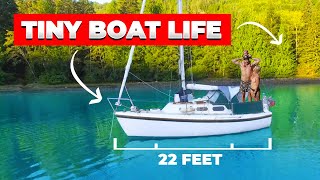
The Jouet 22 (ELOR 65) is a 6.5-meter fractional sloop designed by Paul Elvstrom and Jan Kjrulff, built between 1974 and 1979. It features a fin keel with a transom-hung rudder, a 2.4-meter beam, a 1.5-meter draft, and displaces 1275 kg. Crews performing maintenance on the Jouet 22's rudder, as seen aboard Vie d'écume, remove it for antifouling and structural repairs.0:25 This process involves applying multiple coats of antifouling paint, such as Orange Marine grey, with specific drying times between coats.5:59 Owners also address structural gaps on the rudder with gelcoat and eliminate play in the rudder's metal bars to improve autopilot performance.15:48
Fontes
- Review of Jouët 22 - www.yachtdatabase.com
- Jouet 22 — informations, avis, fiche technique
- Jouët 22 - Choisir un bateau - Ouest-atlantis
- Jouet 22 (Elor 65) - sailing.directory
- Jouet 22 : STW001465 : the SailingTheWeb sailboat datasheet
- Jouet 22 — Informationen, Bewertung, technische Daten - Listings Port
- Jouet 22 sails - Boat database - Sailonet
- Jouet 22 : STW001465 : the SailingTheWeb sailboat datasheet
- Grand-voile semi-lattée orientée Pro Radial course-croisière
- J/22 - Wikipedia
- Elor 65 - Choisir un bateau
- Jouet 22 Sailboat Review, Specs, and Listings
- Jouët 22 - Elor 65 - Mini Croiseur
- Hasard - Un petit frére : le JOUET 22
- Volvo Ocean 65 — Wikipédia
- ELVSTROM 6.5 Sail Dimensions, Specs & Sail Pricing