Tides Part 1: Tidal Introduction in Style
2 August 2023 · 34 min · 1K views · Praia da Vitoria
What this video covers
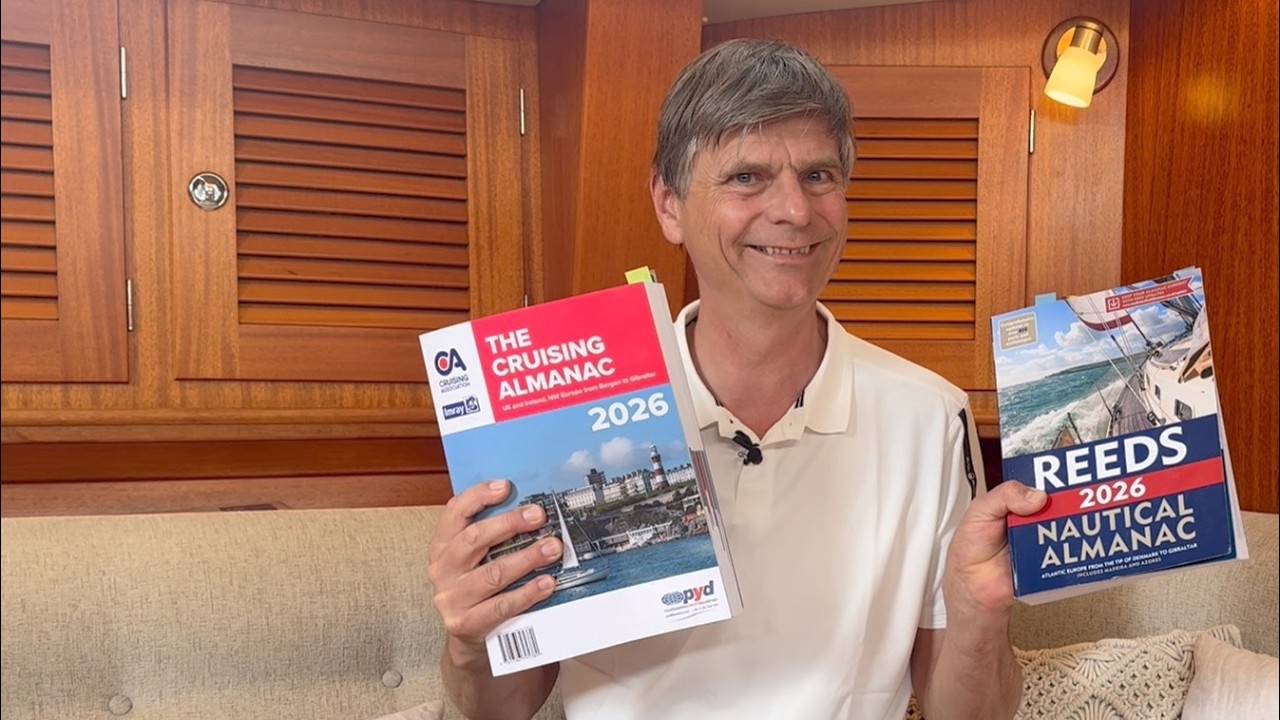
Leon Schulz, aboard his Hallberg-Rassy 46 in Praia da Vitória, Azores, opens a multi-part tidal sailing series by contrasting the Azores' 1-metre tidal range with the English Channel's 4–12 metres and Scotland's 1–8 metres, then explains why those differences exist.0:38 Shallow water over the North Sea continental shelf accelerates tidal movement that crosses thousands of metres of deep Atlantic; the Mediterranean's near-enclosed geometry produces only 0.2–0.3 metres, which the RYA classifies as non-tidal. Using a TimeZero chart showing sea-floor depth and a global tidal-range map, Schulz traces how the Atlantic tidal wave divides at the English Channel entrance near Brest and the Isles of Scilly around 0500, progresses eastward, and reaches Helgoland around noon — creating "end stations" where high water falls at 1200/2400 on spring tides and 0600/1800 on neap tides. Moon and sun gravitational mechanics explain the twice-daily cycle; spring tides occur near full and new moon, neap tides near half moon. Practical rules of thumb: current turns at high and low water, an eight-hour fair-tide window is a full sailing day, and the Irish Sea and Dover Strait offer up to 12 hours of favourable current if a skipper times arrival at the current-reversal point to coincide with high water. The Reeds almanac and a one-page calculation template are flagged for later instalments covering secondary port calculations, course-to-steer in current, and anchoring with tidal height.
Boats in this video
More from Leon Schulz, Reginasailing

From Leon Schulz, Reginasailing — see the channel’s boat, crew, and every analysed video.
The Sailing Directory Newsletter
One email with the fleet's best finds — the moments, boats, and stories worth your watch time. Enter your own address to get your own copy.