Yourbestsailvideo
VHF-DSC Part 10: Duplex Channels
17 October 2019 · 9 min · 6K views
What this video covers
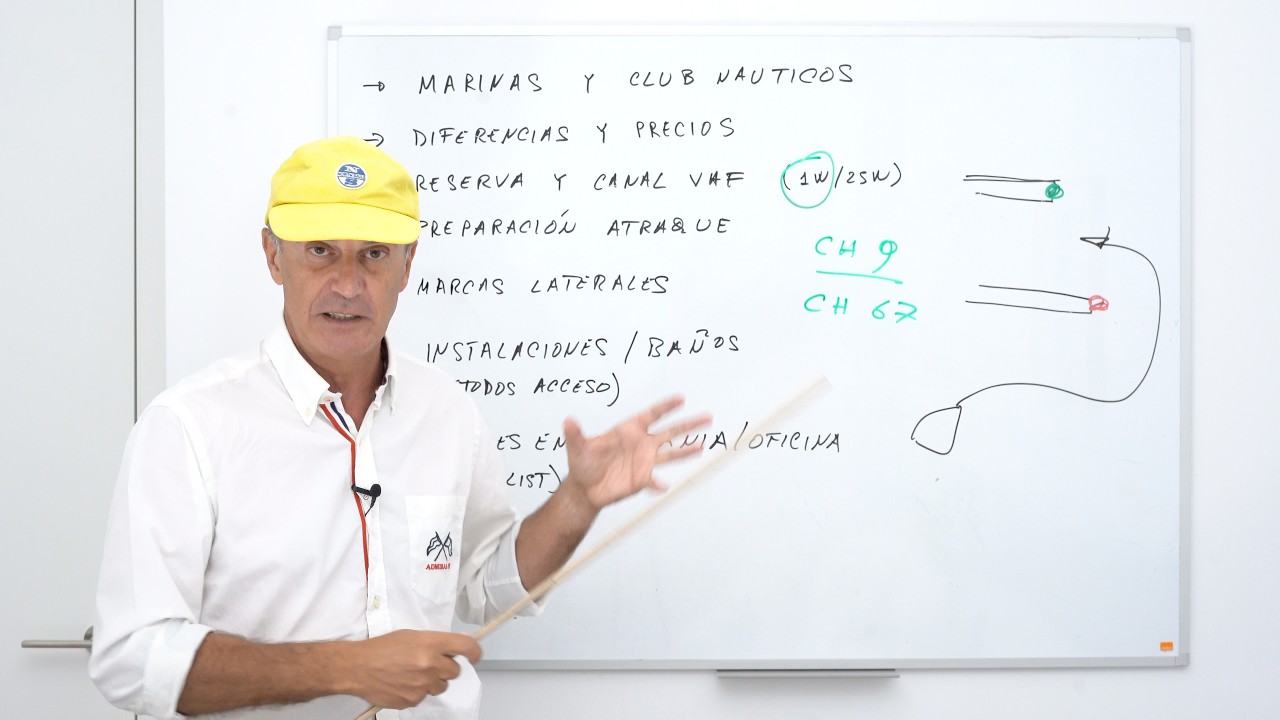
VHF radio communication fails between vessels when operators select duplex channels instead of simplex channels.0:08 Duplex channels, such as channel 23 or Ibiza Radio's channel 3, utilize two distinct frequencies—one for transmitting and one for receiving—specifically to facilitate communication with coastal stations.1:03 Because standard marine VHF radios possess only one antenna and one circuit, they cannot transmit and receive simultaneously on these split frequencies.5:01 Consequently, a transmission sent on a duplex channel remains inaudible to other nearby vessels, as their radios are tuned to receive on a different frequency.3:29 For ship-to-ship communication in Spain, operators should exclusively use simplex channels 6, 8, 72, or 77.6:09 When using channel 6, which also serves as a search-and-rescue frequency for aircraft, operators must limit transmission power to the one-watt low-power setting to prevent interference.7:53 Fixed marine VHF radios typically offer a 25-watt high-power setting for ranges up to 40 nautical miles, while one watt provides a range of approximately 5 nautical miles.8:18
More from Yourbestsail



From Yourbestsail — see the channel’s boat, crew, and every analysed video.
The Sailing Directory Newsletter
One email with the fleet's best finds — the moments, boats, and stories worth your watch time. Enter your own address to get your own copy.