Gone with the Wynnsvideo
The Invisible Problem That Can Destroy a Boat
1 March 2026 · 43 min · 328K views · Amsterdam, Netherlands
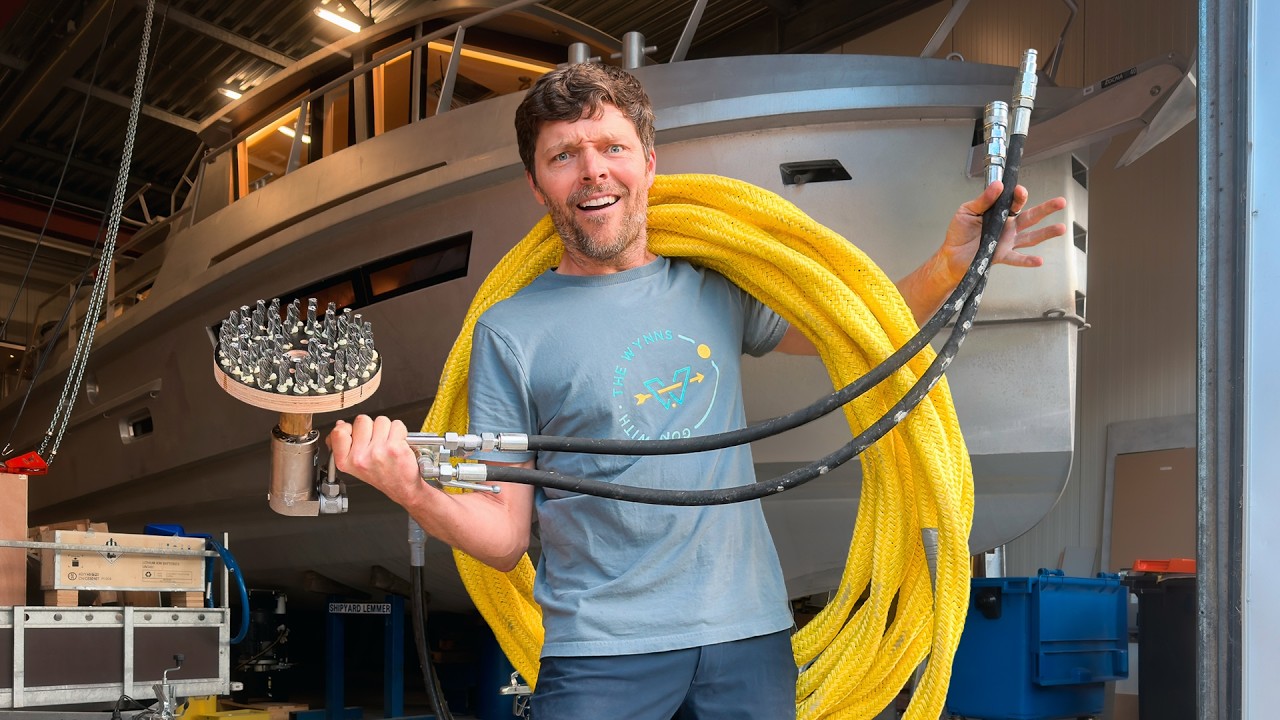
Jess Gatt explains boat systems with host aboard
What this video covers
Jessica Gatt, Managing Director of Marine Protection Systems (MPS), conducts a full corrosion and stray-current inspection aboard Nikki and Jason Wynn's aluminium boat — purchased at auction with no survey and no sea trial — while it sits in fresh water.1:30 Gatt's inspection covers hull grounding versus isolated battery systems, the risks of circulating current on metallic hulls (aluminium, steel, carbon), and how to test for each using a custom MPS tool and a clamp meter. She explains galvanic corrosion versus stray current: galvanic corrosion attacks the least noble metal predictably, while stray current destroys any metal in its path within hours — propellers, shafts, and rudders included.12:02 Higher-voltage 48V systems require as little as 0.1–0.2 amps to cause the same damage a 12V system would need 300–400 milliamps to produce.12:54 Shore power at earthed marinas daisy-chains pedestals, turning the marina into a galvanic cell; an isolation transformer breaks that connection and is confirmed effective on the Wynns' boat via open-circuit resistance testing.17:20 Anode selection depends on hull material and cruising environment: magnesium anodes suit fresh water only, zinc anodes self-passivate in fresh water and carry heavier metals, and aluminium anodes — alloyed with magnesium and other metals to increase activity — work across environments and are the correct choice for an aluminium hull transitioning from fresh to salt water.23:07 The ABYC minimum for cathodic protection is 200 millivolts; overprotection causes its own rapid disbondment and coating failure.23:44
More from Gone with the Wynns




From Gone with the Wynns — see the channel’s boat, crew, and every analysed video.
The Sailing Directory Newsletter
One email with the fleet's best finds — the moments, boats, and stories worth your watch time. Enter your own address to get your own copy.